The Thing Nobody Mentions at the Budget Meeting
Your city council approved a new streetlight system last month. Maybe you saw it in the agenda. Maybe you didn’t. Either way, the trucks are probably already here, swapping out those old sodium-vapor fixtures for sleek LED units that talk to each other through wireless networks. They’re calling it a smart streetlight program. It saves money. It’s modern. It’s efficient.
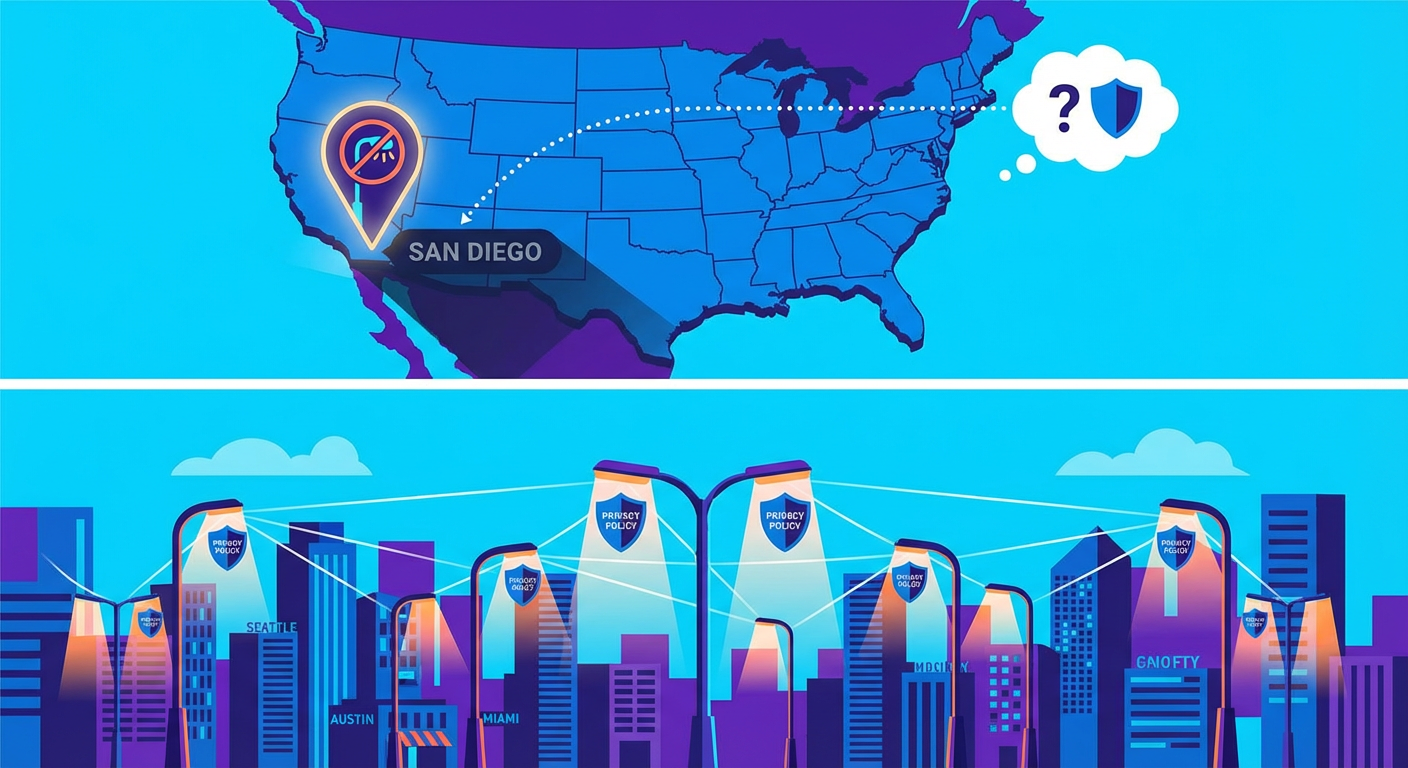
Here’s what nobody’s saying out loud: it’s also collecting data about when you leave your house, which streets you walk down, and whether you’re alone or with someone else.
This isn’t conspiracy thinking. This is what’s actually in the contracts. Over 400 U.S. municipalities have deployed these networked LED systems by early 2026, and most people installing them are genuinely trying to cut their electricity bills. The problem is that the same hardware that dims lights when nobody’s around can also feed real-time video and sensor information to whoever has access to the network. And spoiler alert: that might not just be your city.
The Math Is Real, But So Is the Catch
Let’s start with what’s actually true about these systems. They work. Municipal energy costs drop 50 to 70 percent compared to the old lighting setups, according to the U.S. DOE Solid-State Lighting Program. Your city’s budget gets real relief. In a town where streetlights account for a significant chunk of the electric bill, that’s tens of thousands of dollars per year. Some of that money could go toward fixing potholes or funding community programs. That part isn’t marketing spin.
The problem arrives in the fine print of the vendor contracts. About 68 percent of new municipal smart streetlight deals include clauses that let third parties access the data without being explicitly discussed during the public city council votes where residents might actually object. Those third parties could be tech companies, data brokers, or advertisers. They could be law enforcement agencies. The city council members voting yes might not even realize those clauses are in there, because they’re buried in 40-page procurement documents that nobody reads before the 7 p.m. Tuesday meeting.
San Diego figured this out the hard way in 2020 when residents discovered that their smart streetlights were feeding information to police without a clear policy in place. The city pulled the plug. But more than 30 cities have quietly brought similar systems back online between 2023 and 2025, just with better privacy language in the contracts. The technology didn’t go away. The objections did.
What We Actually Lost When We Stopped Paying Attention
Before smart streetlights, a streetlight was simple. It turned on at dusk. It turned off at dawn. Nobody knew you walked past it. Nobody was counting. That wasn’t nostalgia talking. That was just how public space worked.
When you lose that baseline of anonymity in your own neighborhood, you lose something specific and functional. You lose the ability to move through your community without creating a record. You lose the assumption that your habits aren’t being sorted, analyzed, and stored somewhere. The feeling of safety in public space was connected to something real: the fact that public space was actually public.
The streetlight doesn’t need to actively surveil to change how you move. It just needs to be there, doing it. That’s the behavior shift that matters. When people know they’re being watched, they change what they do, where they walk, which routes they take home. Researchers have documented this for decades. It’s not paranoia. It’s how human beings actually function.
The trade-off, your city will tell you, is that these systems make streets safer. Better lighting. Faster response to outages. Data that helps city planners understand traffic patterns. All of that might be true. But nobody voted specifically on that trade-off. They voted on a budget line item.
How Other Cities Actually Protected Themselves
This isn’t unsolvable. Some municipalities figured it out. Cities that adopted model surveillance ordinances like those promoted through the ACLU Community Surveillance Oversight Report 2025 saw a 40 percent reduction in resident privacy complaints compared to cities without explicit policies. Those policies required clear public disclosure of what data the streetlights collect, who can access it, and how long it’s stored. They required explicit council votes on data-sharing agreements, not hidden vendor clauses. They required actual oversight, meaning real people reviewing what’s happening on a regular basis.
Some cities even required that cameras be disabled by default and only turned on during specific situations, with documented justification. That sounds expensive, but it’s not. It’s a setting. It costs nothing to enable. It costs nothing to disable.
What these cities did was straightforward: they treated the data collection as a separate decision from the energy savings. They said, yes, we want efficient streetlights. No, we don’t want an undisclosed surveillance network. We want both things, and we’re willing to buy hardware that does one thing very well instead of hardware that does many things we didn’t approve.
What You Actually Do Right Now
Check your city council’s next agenda. Search for smart streetlights, LED retrofit, intelligent lighting, or street infrastructure technology. If it’s there, read the staff report before the meeting. If it’s not there yet, ask the public works director when they’re planning to roll it out. They probably have a grant already approved or a vendor already selected. You’re not behind.
Pull the contract. It’s public record. Ask your council member specifically: who can access the data? For how long? Can it be shared with police? Does any third party have access? Make them answer before the vote, not after.
If you find out your system is already installed and already collecting data, request the vendor agreement and the data-sharing policies. If they don’t have explicit policies in writing, that’s the actual problem. That’s fixable.
Bring a friend to the meeting. Seriously. Bring someone who cares about your street, your neighborhood, or just having city council actually answer questions. Bring coffee. This is not complicated stuff. It’s just stuff that requires someone to show up and say: we want the light that’s efficient and also we want the public space that’s actually public. Can we have both?
The answer, in most cases, is yes. But only if someone asks.