The Spaces We’re Losing: How Faith Communities Still Anchor Our Neighborhoods

The Numbers Tell a Story We’re Still Learning to Read

Walk through most American neighborhoods today and you’ll notice something. The buildings are still there. Churches, synagogues, mosques, temples. But fewer cars fill their parking lots on weekends. Fewer voices echo from their halls during the week.

The shift shows up starkly in recent Pew Research religion data. Adults claiming no religious affiliation now represent more than 30 percent of the population, nearly doubling from 16 percent in 2007. That’s not just a statistic. It’s the story of millions of people stepping away from institutions that once structured their weeks, their friendships, their sense of place.

But here’s what the numbers don’t capture immediately. When people leave religious communities, they don’t just lose access to worship. They lose something harder to replace: the dense network of relationships, mutual aid, and shared responsibility that made these spaces community anchors for generations.

What Actually Happens When the Lights Go Out

Consider what a typical congregation provides beyond Sunday services. Free meeting space for neighborhood groups. Volunteer networks that organize during crises. Food banks that know their clients by name. After-school programs where kids from different families learn they belong to something larger than their households.

These functions don’t emerge automatically in secular communities. They require intention, funding, and most importantly, the kind of sustained commitment that comes from shared values and regular gathering. When congregations close or shrink, the social infrastructure they provided often vanishes with them, leaving gaps that government programs and nonprofit organizations struggle to fill with the same depth and consistency.

The loss hits hardest in communities that can least afford it. Working-class neighborhoods where churches provided not just spiritual guidance but practical support. Immigrant communities where houses of worship were cultural bridges and mutual aid societies. Rural areas where the local church was often the only institution offering social services between county lines.

The Surprising Places Where Faith Communities Are Growing

Yet the story isn’t simply one of decline. While many conservative denominations report shrinking membership, progressive religious communities are expanding. These congregations attract people seeking spiritual community without rigid doctrine, social justice work grounded in moral tradition, and inclusive spaces where doubt and questioning are welcomed rather than discouraged.

The pandemic accelerated another shift that’s reshaping religious participation. Online church communities that formed during lockdowns have retained about 40 percent of their digital attendance even after in-person services resumed. For many, virtual participation offers accessibility that physical buildings couldn’t provide, whether due to disability, work schedules, or geographic isolation.

Perhaps most significantly, the fastest-growing religious self-identification isn’t atheism or agnosticism. It’s “spiritual but not religious.” These Americans seek meaning, connection, and transcendence outside traditional institutional frameworks. Some find it in meditation groups, nature-based practices, or eclectic spiritual communities that blend traditions. Others create their own networks of meaning-making and mutual support.

Where Faith Communities Still Lead

Even as individual religious affiliation declines, interfaith coalitions have emerged as powerful forces for community change. On housing policy, these partnerships bring moral authority to policy debates that secular advocacy groups sometimes struggle to achieve. Immigration rights organizations find their most effective local allies are often congregations willing to provide sanctuary, legal aid, and family support regardless of members’ documentation status.

Anti-poverty work particularly benefits from faith community involvement. Religious institutions bring volunteer networks, existing relationships with vulnerable populations, and moral frameworks that sustain long-term commitment to difficult work. According to Religion News Service reporting, interfaith coalitions consistently punch above their weight in local organizing because they combine practical resources with the moral clarity that motivates sustained action.

These collaborations succeed because they focus on shared values rather than shared beliefs. Jews, Christians, Muslims, and secular humanists may disagree about theology, but they often align on practical questions about human dignity, community responsibility, and justice.

Building Community Infrastructure for a Secular Age

The challenge facing American communities isn’t primarily theological. It’s architectural, in the broadest sense. How do we build social infrastructure that provides the benefits religious communities once offered without requiring shared religious belief?

Some experiments are emerging. Community land trusts that prioritize neighbor relationships alongside affordable housing. Mutual aid networks that organize around shared geography rather than shared faith. Neighborhood councils that create regular gathering spaces for local decision-making and relationship-building.

But these secular alternatives often struggle with sustainability. Religious communities persist across generations because they’re built on something deeper than shared interests or even shared values. They’re built on shared stories about ultimate meaning, which create the kind of commitment that survives disagreement, hardship, and leadership changes.

The most successful secular community organizations seem to understand this. They invest heavily in ritual, storytelling, and practices that create emotional bonds between members. They recognize that sustainable community requires more than efficient service delivery. It requires belonging.

As our neighborhoods continue changing, the question isn’t whether we’ll preserve religious institutions exactly as they were. Many won’t survive, and perhaps shouldn’t. The question is whether we’ll learn from what made them effective community anchors and build new institutions that work for a more diverse, secular age. The spaces we create next will shape how Americans relate to each other for generations. That’s work worth getting right.

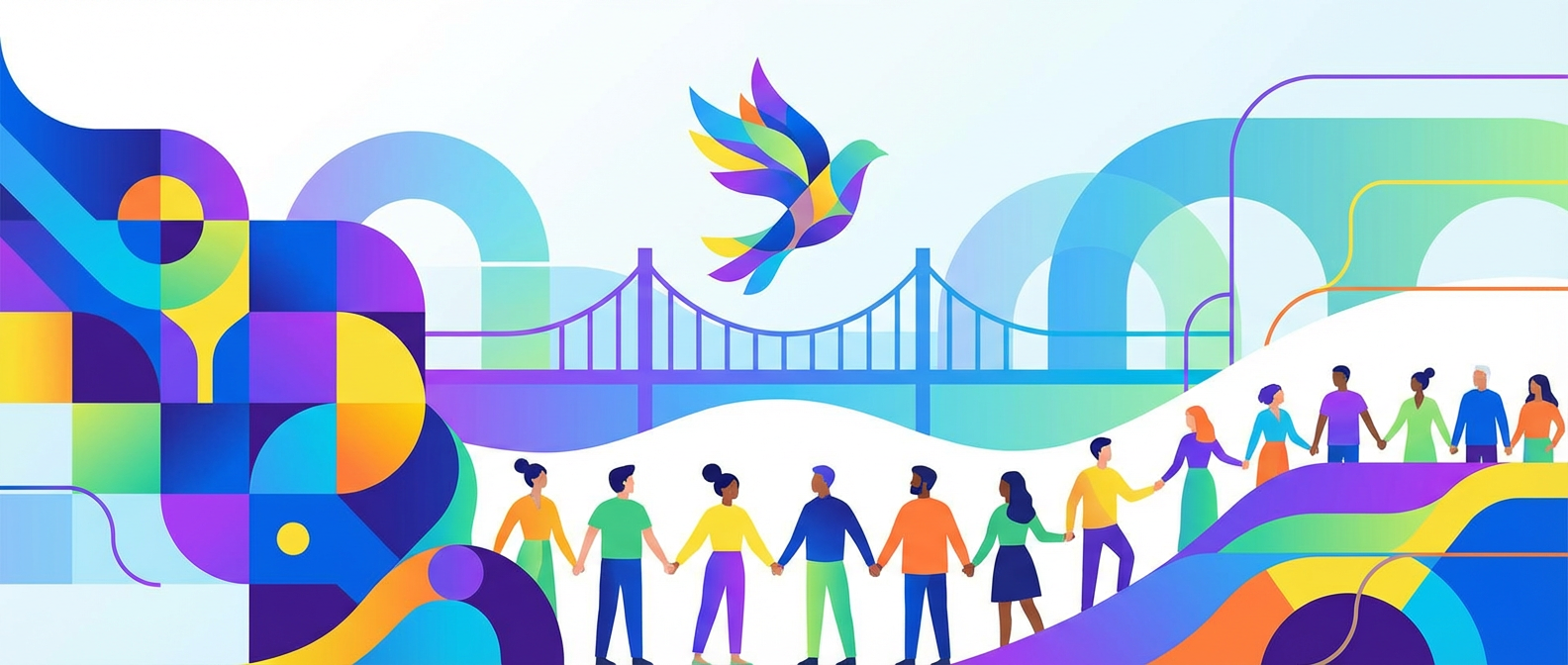
The Organising Story: Anti-hate activism and counter-extremism work

Here is the thing I keep coming back to on this. The topic of anti-hate activism and counter-extremism work rewards more careful attention than the typical coverage provides, and the reason is not complicated once you know where to look.

What I find most interesting, and I think you will too, when viewed through the lens of case study, is Southern Poverty Law Center tracking over 1,200 active hate groups in US. The practical read of the situation is also the more accurate one once you examine what the evidence actually shows.

The Organising Story: Anti-hate activism and counter-extremism work

The Study: Setting the Terms

Hate crime reporting at 30-year highs across US and Western Europe isn’t just a data point in the story of anti-hate activism and counter-extremism work. It’s the structural condition that makes everything else in this analysis legible. Context like this doesn’t age quickly. The conditions that produced it have been building for years, and the convergence is what makes the current moment distinct from previous moments that looked similar from a distance.

Southern Poverty Law Center tracking over 1,200 active hate groups in US.

Online deradicalisation programmes showing mixed but improving results. Netz gegen Nazis anti-fascism has been tracking this dimension consistently.

What makes this moment worth examining carefully isn’t the novelty but the confirmation. The underlying dynamics have been visible for some time. What’s new is that they have reached a threshold where ignoring them requires active effort rather than simple inattention. That threshold crossing is the event, not the underlying movement that produced it.

And community-based intervention is more effective than law enforcement alone in studies. This is part of that same picture. These elements don’t exist in separate silos. They’re reinforcing conditions in the same structural shift.

The Organising Story: The Analysis

Community-based intervention being more effective than law enforcement alone in studies is where the analysis gets more specific. The surface reading is accessible and not wrong, but it misses the mechanism. The mechanism is where the practical insight lives. What I find most interesting, and I think you will too, is the mechanism: Muslim Jewish Christian coalitions finding common ground against far-right. Understanding it changes what you do with the information.

Social media platforms are under pressure to improve algorithmic amplification controls.

The skeptical counterargument deserves honest engagement: prior moments with similar surface characteristics didn’t produce the outcomes that seemed logical at the time. That history is real. What’s different now is social media platforms under pressure to improve algorithmic amplification controls. This isn’t a minor variable. It’s the infrastructure condition that previous cycles lacked. Infrastructure changes tend to be persistent in ways that sentiment-driven changes are not. SPLC hate group monitoring is one source tracking this dimension with the rigour it requires.

There’s also a distributional question that often goes unaddressed in coverage of anti-hate activism and counter-extremism work: who captures the value created by these shifts, and who absorbs the disruption costs? The big picture can be positive while the distribution is uneven in ways that matter enormously to specific participants. Keeping that distributional lens in view is part of reading the situation clearly rather than simply optimistically.

Implications: What This Means If You Care About Community campaigns

The implications of anti-hate activism and counter-extremism work extend beyond the immediate context. Hate crime reporting at 30-year highs across US and Western Europe, combined with the structural conditions described above, creates a situation where adjacent fields, decisions, and communities are affected in ways that aren’t always visible from inside the primary story. The second-order effects are frequently more important than the first-order ones. They’re where careful attention pays the highest returns.

The warmth of a town hall that actually works.

The practical question isn’t whether to engage with these dynamics but how. The answer depends on context, on what role you occupy relative to anti-hate activism and counter-extremism work and what your actual decision horizon is. But the first step is the same regardless: accurate understanding of what’s actually happening rather than what the most available narrative says is happening.

A few concrete observations are worth separating out from the broader analysis. First: Southern Poverty Law Center tracking over 1,200 active hate groups in US isn’t a temporary condition. It’s a new baseline. Second: Muslim Jewish Christian coalitions finding common ground against far-right suggests that the adjustment period isn’t over. Third, and most important: the organisations and individuals who are treating the current moment as a new steady state rather than a transition are making a categorisation error that will be costly to unwind later.

The Case Against: What the Critics Get Right

Intellectual honesty requires acknowledging the strongest counterarguments, not just the weakest ones. The case against the optimistic reading of anti-hate activism and counter-extremism work isn’t trivial. There are structural vulnerabilities in the current picture that deserve direct engagement rather than dismissal.

The most serious objection is the one about sustainability. Online deradicalisation programmes showing mixed but improving results can be read not as a foundation but as a ceiling. A point beyond which growth becomes self-limiting because of the very dynamics that produced it. If the current state has already incorporated most of the available supply of early-adopting participants, the remaining growth curve may be structurally shallower than the recent trajectory implies.

Social media platforms are under pressure to improve algorithmic amplification controls.

Looking Forward

The trajectory here is clearer than the pace. Making predictions about when specific thresholds will be crossed is genuinely difficult, and anyone claiming precision about timelines should be treated with scepticism. But the direction, toward hate crime reporting at 30-year highs across US and continued development of the conditions described above, is supported by the evidence in a way that isn’t contingent on a single variable going right.

Social media platforms under pressure to improve algorithmic amplification controls is the variable to watch as the leading indicator. Historical patterns suggest it moves first, with broader metrics following with some lag. This doesn’t make the outcome certain, but it makes it legible. And legibility is the precondition for good decisions.

Three questions are worth holding as the story develops. First: are the structural conditions that enabled the current state durable, or are they cyclical? Second: who is positioned to benefit from the next phase, and does that differ materially from who benefited in the current phase? Third: what would a clean falsification of the optimistic thesis look like, and is there any evidence of that signal emerging? These questions don’t need answers today, but having asked them changes what you notice in the months ahead.

That’s my read. I want to hear yours.

What worked in your own organising that you wish was better documented?

Religious and faith communities in a secular age — An Honest Case

Here is the thing I keep coming back to on this. The topic of religious and faith communities in a secular age rewards more careful attention than the typical coverage provides, and the reason is not complicated once you know where to look.

What I find most interesting, and I think you will too, is faith communities providing social infrastructure that secular alternatives can’t replace. The practical read of the situation is also the more accurate one once you examine what the evidence actually shows.

The Study: Setting the Terms

The religiously unaffiliated now make up over 30 percent of US adults, up from 16 percent in 2007. This isn’t just a data point in the story of religious and faith communities in a secular age, it’s the structural condition that makes everything else in this analysis make sense. Context like this doesn’t age quickly. The conditions that produced it have been building for years, and the convergence is what makes the current moment distinct from previous moments that looked similar from a distance.

Faith communities are providing social infrastructure that secular alternatives can’t replace.

Progressive religious spaces are growing as conservative denominations shrink. Religion News Service has been tracking this consistently.

What makes this moment worth examining carefully isn’t the novelty but the confirmation. The underlying dynamics have been visible for some time. What’s new is that they’ve reached a threshold where ignoring them requires active effort rather than simple inattention. That threshold crossing is the event, not the underlying movement that produced it.

Online church communities formed during COVID are retaining 40 percent of attendance. This is part of that same picture. These elements don’t exist in separate silos, they’re reinforcing conditions in the same structural shift.

The Organising Story: The Analysis

Online church communities retaining 40 percent of attendance is where the analysis gets more specific. The surface reading is accessible and not wrong, but it misses the mechanism. And the mechanism is where the practical insight lives. What I find most interesting is that interfaith coalitions are leading on housing, immigration, and anti-poverty work. Understanding this mechanism changes what you do with the information.

“Spiritual but not religious” has become the largest growing self-identification category.

The skeptical counterargument deserves honest engagement. Previous moments with similar surface characteristics didn’t produce the outcomes that seemed logical at the time. That history is real. What’s different now is this “spiritual but not religious” growth, which isn’t a minor variable. It’s the infrastructure condition that previous cycles lacked. Infrastructure changes tend to stick around in ways that sentiment-driven changes don’t. Pew Research religion data is one source tracking this with the rigor it requires.

There’s also a distributional question that often goes unaddressed in coverage of religious and faith communities in a secular age: who captures the value created by these shifts, and who absorbs the disruption costs? The aggregate picture can be positive while the distribution is uneven in ways that matter enormously to specific participants. Keeping that distributional lens in view is part of reading the situation clearly rather than simply optimistically.

Implications: What This Means If You Care About Community campaigns

The implications extend beyond the immediate context. The religiously unaffiliated now making up over 30 percent of US adults, combined with the structural conditions described above, creates a situation where adjacent fields, decisions, and communities get affected in ways that aren’t always visible from inside the primary story. The second-order effects are frequently more important than the first-order ones. They’re where careful attention pays the highest returns.

Think about the warmth of a town hall that actually works.

The practical question isn’t whether to engage with these dynamics but how. The answer depends on context, on what role you occupy relative to religious and faith communities in a secular age and what your actual decision horizon is. But the first step is the same regardless: accurate understanding of what’s actually happening rather than what the most available narrative says is happening.

A few concrete observations are worth separating out from the broader analysis. First: faith communities providing irreplaceable social infrastructure isn’t a temporary condition, it’s a new baseline. Second: interfaith coalitions leading on housing, immigration, and anti-poverty work suggests that the adjustment period isn’t over. Third, and most important: the organizations and individuals who are treating the current moment as a new steady state rather than a transition are making a categorization error that will be costly to unwind later.

The Case Against: What the Critics Get Right

Intellectual honesty requires acknowledging the strongest counterarguments, not just the weakest ones. The case against the optimistic reading of religious and faith communities in a secular age isn’t trivial. There are structural vulnerabilities in the current picture that deserve direct engagement rather than dismissal.

The most serious objection is about sustainability. Progressive religious spaces growing as conservative denominations shrink can be read not as a foundation but as a ceiling, a point beyond which growth becomes self-limiting because of the very dynamics that produced it. If the current state has already incorporated most of the available supply of early-adopting participants, the remaining growth curve may be structurally shallower than the recent trajectory implies.

The “spiritual but not religious” category remains the largest growing self-identification.

Looking Forward

The trajectory here is clearer than the pace. Making predictions about when specific thresholds will be crossed is genuinely difficult, and anyone claiming precision about timelines should be treated with skepticism. But the direction toward more religiously unaffiliated Americans and continued development of the conditions described above is supported by evidence in a way that doesn’t depend on a single variable going right.

The “spiritual but not religious” category is the variable to watch as the leading indicator. Historical patterns suggest it moves first, with broader metrics following with some lag. This doesn’t make the outcome certain, but it makes it readable. And readability is the precondition for good decisions.

Three questions are worth holding as the story develops. First: are the structural conditions that enabled the current state durable, or are they cyclical? Second: who is positioned to benefit from the next phase, and does that differ materially from who benefited in the current phase? Third: what would a clean falsification of the optimistic thesis look like, and is there any evidence of that signal emerging? These questions don’t need answers today, but having asked them changes what you notice in the months ahead.

That’s my read. I want to hear yours.

What worked in your own organizing that you wish was better documented?

Anti-hate activism and counter-extremism work: Community conflict journalism

Here is the thing I keep coming back to on this. The topic of anti-hate activism and counter-extremism work rewards more careful attention than the typical coverage provides, and the reason is not complicated once you know where to look.

What I find most interesting, and I think you will too, when viewed through the lens of community conflict journalism, is Southern Poverty Law Center tracking over 1,200 active hate groups in US. The fair to all parties read of the situation is also the more accurate one once you examine what the evidence actually shows.

Anti-hate activism and counter-extremism work: Community conflict journalism

The Journalism: Setting the Terms

Hate crime reporting at 30-year highs across US and Western Europe isn’t just a data point in the story of anti-hate activism and counter-extremism work. It’s the structural condition that makes everything else in this analysis make sense. Context like this doesn’t age quickly. The conditions that produced it have been building for years, and the convergence is what makes the current moment different from previous moments that looked similar from a distance.

Southern Poverty Law Center tracking over 1,200 active hate groups in US.

Online deradicalisation programmes showing mixed but improving results. Netz gegen Nazis anti-fascism has been tracking this dimension consistently.

What makes this moment worth examining carefully is not the novelty but the confirmation. The underlying dynamics have been visible for some time. What’s new is that they have reached a threshold where ignoring them requires active effort rather than simple inattention. That threshold crossing is the event, not the underlying movement that produced it.

And community-based intervention is more effective than law enforcement alone in studies, which is part of that same picture. These elements don’t exist in separate silos. They’re reinforcing conditions in the same structural shift.

The Disagreement: The Analysis

Community-based intervention being more effective than law enforcement alone in studies is where the analysis gets more specific. The surface reading is accessible and not wrong, but it misses the mechanism. And the mechanism is where the practical insight lives. What I find most interesting, and I think you will too, is the mechanism: Muslim Jewish Christian coalitions finding common ground against far-right. Understanding it changes what you do with the information.

Social media platforms under pressure to improve algorithmic amplification controls.

The skeptical counterargument deserves honest engagement: prior moments with similar surface characteristics didn’t produce the outcomes that seemed logical at the time. That history is real. What’s different now is social media platforms under pressure to improve algorithmic amplification controls, which isn’t a minor variable. It’s the infrastructure condition that previous cycles lacked. Infrastructure changes tend to stick around in ways that sentiment-driven changes don’t. SPLC hate group monitoring is one source tracking this dimension with the rigor it requires.

There’s also a distributional question that often goes unaddressed in coverage of anti-hate activism and counter-extremism work: who captures the value created by these shifts, and who absorbs the disruption costs? The aggregate picture can be positive while the distribution is uneven in ways that matter enormously to specific participants. Keeping that distributional lens in view is part of reading the situation clearly rather than simply optimistically.

Implications: What This Means If You Care About Planning disputes

The implications of anti-hate activism and counter-extremism work extend beyond the immediate context. Hate crime reporting at 30-year highs across US and Western Europe combined with the structural conditions described above creates a situation where adjacent fields, decisions, and communities are affected in ways that aren’t always visible from inside the primary story. The second-order effects are frequently more important than the first-order ones, and they’re where careful attention pays the highest returns.

The warmth of a town hall that actually works.

The practical question isn’t whether to engage with these dynamics but how. The answer depends on context, on what role you occupy relative to anti-hate activism and counter-extremism work and what your actual decision horizon is. But the first step is the same regardless: accurate understanding of what’s actually happening rather than what the most available narrative says is happening.

A few concrete observations are worth separating out from the broader analysis. First: Southern Poverty Law Center tracking over 1,200 active hate groups in US isn’t a temporary condition. It’s a new baseline. Second: Muslim Jewish Christian coalitions finding common ground against far-right suggests that the adjustment period isn’t over. Third, and most important: the organisations and individuals who are treating the current moment as a new steady state rather than a transition are making a categorisation error that will be costly to unwind later.

The Case Against: What the Critics Get Right

Intellectual honesty requires acknowledging the strongest counterarguments, not just the weakest ones. The case against the optimistic reading of anti-hate activism and counter-extremism work isn’t trivial. There are structural vulnerabilities in the current picture that deserve direct engagement rather than dismissal.

The most serious objection is the one about sustainability. Online deradicalisation programmes showing mixed but improving results can be read not as a foundation but as a ceiling, a point beyond which growth becomes self-limiting because of the very dynamics that produced it. If the current state has already incorporated most of the available supply of early-adopting participants, the remaining growth curve may be structurally shallower than the recent trajectory implies.

Social media platforms under pressure to improve algorithmic amplification controls.

Looking Forward

The trajectory here is clearer than the pace. Making predictions about when specific thresholds will be crossed is genuinely difficult, and anyone claiming precision about timelines should be treated with skepticism. But the direction toward hate crime reporting at 30-year highs across US and continued development of the conditions described above is supported by the evidence in a way that isn’t contingent on a single variable going right.

Social media platforms under pressure to improve algorithmic amplification controls is the variable to watch as the leading indicator. Historical patterns suggest it moves first, with broader metrics following with some lag. This doesn’t make the outcome certain, but it makes it readable. And readability is the precondition for good decisions.

Three questions are worth holding as the story develops. First: are the structural conditions that enabled the current state durable, or are they cyclical? Second: who is positioned to benefit from the next phase, and does that differ materially from who benefited in the current phase? Third: what would a clean falsification of the optimistic thesis look like, and is there any evidence of that signal emerging? These questions don’t need answers today, but having asked them changes what you notice in the months ahead.

That’s my read. I want to hear yours.

What am I getting wrong about either position?

Ministrybestpractices — Your Community Hub

Ministrybestpractices — Your Community Hub

Local news, events, and resources for an engaged community.

Strong communities don’t happen by accident. This site exists to connect residents, help you discover local opportunities, and make civic life less confusing. We cover local news, host event listings, and maintain resources that actually matter to people who live here.

Topics we cover: Local News · Events · Resources · Projects · Directory · Contact

Exploring the AI Frontier: The Rise of Creative Machines

Hey there, tech friends! Something wild is happening right now, and it’s not just another TikTok dance craze. I’ve been exploring how Artificial Intelligence is crashing the creative party. This isn’t your typical “AI makes spreadsheets faster” story. We’re talking about machines that are actually getting creative. Seriously. Pour yourself some coffee because this is going to get interesting.

From Code to Canvas: AI in Visual Art

Remember when your computer was just that beige box that took five minutes to boot up? Now that same technology can create art that would make professional artists do a double-take.

AI systems like DALL-E and MidJourney are creating wild visuals from simple text descriptions. Type “cat in a spacesuit juggling potatoes” and boom, there it is. But here’s what really gets me excited. It’s not just the weird images (though those are pretty great). These neural networks are actually learning how humans see beauty. They’re figuring out color harmony, composition, even emotional expression.

I’ll be honest, I can barely draw a decent stick figure, but watching machines learn the subtle details of visual appeal is mind-blowing. Maybe I should start collaborating with AI instead of apologizing to my mom for my terrible doodles.

Soundtrack of the Future: AI in Music

Music has always felt sacred to me. Something so personal that machines could never touch the soul of it. Well, AI just proved me completely wrong.

OpenAI’s MuseNet and Jukedeck are teaching computers to create full symphonies and catchy pop songs that sound genuinely good. They can blend jazz with electronic, classical with hip-hop, whatever you want. AI isn’t just making noise anymore. It’s making music.

Before you panic about robots taking over your playlist, think about this: what if you could have a creative partner that knows exactly what you like and helps you make personalized tracks? It’s like having a musical collaborator who never gets tired and always brings fresh ideas.

The Written Word: AI in Literature

Can AI really tell a good story? As someone who devours books, I was pretty skeptical. But after seeing what OpenAI’s GPT models can do, I’m genuinely impressed by the storytelling potential.

These AI tools are writing dialogue, building plot structures, even creating poetry. We’re not talking Pulitzer Prize material yet, but the collaborative possibilities are huge. My next blog post might actually have a co-author with silicon for brains.

Sure, some of the creative writing still feels like fancy Mad Libs. But I can see how AI could help new writers get started. With some human guidance and editing, we might see stories that push creative boundaries in ways we haven’t imagined.

Implications and Challenges: Navigating the New Creative Landscape

Of course, AI in creative fields comes with some serious questions and concerns. We’re dealing with tricky issues around originality, ownership, and ethics. If an AI creates a painting, who actually owns it? The programmer? The person who typed the prompt? The AI itself?

Then there’s the job displacement worry. Look, I get it. But let’s take a breath here. Photography didn’t kill painting. AI won’t replace artists either. It’s going to change how we create, probably make creativity more accessible to everyone.

The Future Outlook: Creative Synergy Between Humans and Machines

When I think about what’s coming next, I get genuinely excited. AI keeps getting better, and I think we’re heading toward something really special: humans and machines creating together in ways that amplify both our strengths.

Picture art shows curated by both humans and AIs. Music festivals where AI DJs read the crowd in real time and adapt. Novels where AI helps develop complex character relationships that surprise even the human author. We’re talking about creativity that combines human emotion with machine precision.

As we figure this out together, let’s stay curious. The future we’re building could be pretty amazing, whether we’re working in pixels, musical notes, or words on a page.


That’s all for today’s deep dive. I’m actually thinking about asking an AI to help me write some poetry later. Who knows, maybe together we’ll create something that would make the old masters proud. Go pick up that paintbrush, tune your guitar, or open that blank document. The AI creative revolution is here, and it’s anything but boring.

Stay curious, stay creative!

Unlocking Human Potential: The AI Revolution in Creative Arts

Hey tech enthusiasts! Today, I’m diving into what might just be one of the most exciting developments in artificial intelligence—a space that’s changing what machines can do and how we express ourselves: AI in the creative arts. Ready to explore where technology meets creativity? Let’s jump in.

A New Picasso in Town? Meet AI Artists

If someone had told me a few years back that artificial intelligence would be competing in art exhibitions, I’d have probably laughed out loud. But here we are in 2023, and it honestly feels like we’re watching something historic unfold. AI has started painting pictures, composing music, writing poetry, and even creating compelling stories! There’s AIVA, an AI built to compose emotional music that actually moves you. And DALL-E, OpenAI’s model that whips up incredible images from just text descriptions. These aren’t sci-fi pipe dreams anymore—they’re real, and people are taking notice.

So here’s the thing. Are AI systems the new Picassos or Da Vincis? Not really. They don’t have the emotional depth, historical weight, or that indefinable human spark that traditional artists bring. But they offer something different: an unbiased, data-heavy perspective that can spot ideas and patterns we might miss completely. Their ability to brainstorm is genuinely mind-blowing.

Tools, Not Replacements: Empowering Human Creativity

Here’s the big question everyone’s asking: will AI replace us creative types? I’ve got good news. The consensus seems to be that AI works best as a supportive tool, not a replacement. Think of AI like a fancy new brush in an artist’s toolkit or a weird instrument nobody’s heard before. AI-generated art can be a starting point or just offer a fresh angle that works alongside human creativity.

Some artists are already using AI for rough drafts or to explore wild new directions, basically making AI their creative partner. Look at what Holly Herndon does with her music—she uses AI-generated vocals to create harmonies that sound almost human but push into completely new territory. The magic happens in that collaboration.

Ethics and Aesthetics: A Balancing Act

It’s not all smooth sailing, though. AI in creative arts brings up some thorny ethical questions we need to tackle. Who actually owns AI-created art—the human or the machine? How do you give credit when dozens of algorithms and massive datasets all contribute to a single piece? There’s also the worry that AI might flood the creative space with generated content, making it harder to find genuinely human-made work.

Then there’s the big aesthetic question. Is AI art even “real” art? The answer probably depends on whether you care more about how something gets made or what the final result looks like.

The Future is (Not) Written in Stone

Let me put on my crystal ball hat for a minute. What might the creative world look like in ten or twenty years? I think we’re moving toward AI becoming this bridge between having an idea and actually making it happen. Picture musicians like Grimes using AI tools to create songs with sounds too complex for humans to dream up alone. Or writers building entire digital worlds with a few clicks, thanks to AI’s ability to generate believable stories and dialogue.

The arts could become way more accessible, letting anyone with an idea and a laptop create something meaningful. This might level the playing field, giving more diverse voices and fresh perspectives a real shot at driving culture forward.

Final Thoughts: A One-of-a-Kind Collaboration

What does this mean for you and me? Honestly, I’m pumped. I can’t wait to see what humans will create when machines become our creative partners. AI isn’t killing human creativity—it’s amplifying it, giving us tools we never could have imagined before. We’re at this incredible moment in art and creativity. Let’s lean into the weirdness and make something amazing.

What’s your take? How do you think AI will reshape creative arts over the next few years? Are we heading toward some kind of technological golden age of creativity, or does bringing AI into the mix water down what makes human expression special? Let’s talk about it in the comments. Until next time, keep making stuff and stay curious.

Exploring the Breakthroughs in Nuclear Fusion: Achievements and Future Possibilities

Hey, tech enthusiasts! Today, we’re diving into something that’s literally on fire—nuclear fusion. It’s funny, isn’t it? We’ve spent years trying to replicate the sun’s energy on Earth, and we’re finally cracking it! So grab some coffee, because we’re about to go nuclear.

The Fantastic World of Fusion

Alright, so first things first, what is nuclear fusion? If you’ve seen any sci-fi movies, you probably think it involves cool-looking reactors and potentially exploding cities. That’s not entirely wrong in the movies, but real-life fusion is way more awesome and promising.

Fusion is the process where two light atomic nuclei come together to form a heavier nucleus, releasing energy in the process. We’re talking about the very reaction that powers the sun and stars. Instead of burning fuels or splitting atoms like in nuclear fission, fusion combines them. Here’s why that’s a big deal: virtually limitless energy and minimal environmental impact. Plus, we’re looking at abundant resources. I mean, the primary fuel is hydrogen, and last I checked, the ocean’s got plenty of that.

Recent Developments: It’s Heating Up!

Now, let’s get to the juicy details. In recent years, there have been some major breakthroughs that have got the entire scientific community buzzing with excitement.

The ITER and British Fusion Dreams

ITER, which stands for International Thermonuclear Experimental Reactor, was the big game in town for a while. It’s like the Beatles of the nuclear fusion world—an international collaboration working to make fusion energy a reality. Based in France, it aims to demonstrate that fusion is not only possible but sustainable on a large scale.

Then there’s the UK, dreaming big with projects like Tokamak Energy. They’re beating their drums about having fusion power in homes by 2040. That’s like Jetsons-level living right around the corner!

Sidenote: Elon Musk and Other Revolutionaries

I can’t talk about cutting-edge tech without mentioning our pal Elon Musk, right? He’s not directly involved with fusion (yet), but he’s always in the loop when it comes to revolutionary energy ideas. Who knows, maybe one day SpaceX will drop a fusion surprise shipment.

Challenges and “Small” Hiccups

Like anything worth pursuing, working with nuclear fusion comes with its challenges. Cue the “womp womp” sound effect.

The Magnet Tango

One of the biggest hurdles is confining the plasma, which reaches temperatures hotter than the sun. We’re talking about strong magnetic fields required to keep it stable. The superconducting magnets involved are industrial-size behemoths and require complex engineering.

Financial and Time Investment

Money makes the world, or in this case, fusion reactors, go ’round. It’s a costly affair, really. The ITER project alone is expected to cost around 20 billion euros. Ouch, right? Then there’s the time factor; initial results might take years or decades. But hey, Rome wasn’t built in a day, and neither will our fusion-powered utopia.

Where This All Leads

I’ll be honest, I’m cautiously optimistic about where fusion could take us. If it becomes our go-to energy source, our carbon footprint gets slashed. Energy bills drop lower than 2020 stock prices. Global energy wars become less of a thing.

Speculative Wonderland

Here we go into the land of “what-ifs”. Imagine a world where every city has its own mini-fusion reactor. Energy poverty could become a thing of the past. And for futurists betting big, betting on fusion might be the winning ticket. It’s a long shot but considering the current pace, let’s say by 2100, we might be sipping synthetic Martian tea powered by fusion reactors.

Conclusion: Fusing Together the Threads

At the end of the day, nuclear fusion is the sci-fi dream becoming a real-world promise. It could change the energy landscape forever, bringing us a cleaner, more efficient, and equitable global energy system. There’s still a long road ahead filled with engineering puzzles and financial hurdles, but I can’t help being excited about our chances of having a small sun on Earth.

Let me know what you think about nuclear fusion breakthroughs, and whether you think we’ll see it in our lifetime. Or, just drop a comment if you want to chat about fusion movies. Until next time, keep chasing the stars and the dreams that light them!

AI in Creative Arts: Are the Robots Stealing Our Paintbrushes?

Today, I want to talk about something that’s got artists and tech folks equally excited and terrified—Artificial Intelligence in creative arts. Now, before you roll your eyes and mutter something about machines taking over the world, hear me out. Are the robots really here to snatch away our paintbrushes, or are they offering us a shiny new palette with colors never seen before?

The Rise of AI in Art: From Pixel Pushers to Picasso Prototypes

Not too long ago, the phrase “AI artist” would’ve been laughed off as science fiction—or whispered in the same breath as UFOs and Bigfoot. But here we are, with AI art generators like DALL-E and Midjourney shaking up the art world. Imagine feeding a neural network some abstract prompts, like “moonlit jazz in a city made of candy,” and voilà! Out comes what might be the next modern art masterpiece. Seriously, it’s like having a personal Salvador Dali, minus the mustache.

And it’s not just digital paintings. We’ve got AI composing music, writing poetry, and even crafting virtual sculptures. Remember the AI-written short story that made it into Japan’s literary competition a few years back? Yeah, that happened.

The Toolbox, Not the Painter

Now, I can almost hear the frantic scrabble for the words “end of creativity.” But let’s pump the brakes, folks. AI isn’t replacing the human touch. It’s expanding it. Think of these tools like Photoshop or Auto-Tune. At one point, these technologies alarmed traditionalists. Now, they’re indispensable.

I once met an artist at a tech conference (yes, some of us enjoy the odd artistic side quest) who used AI to brainstorm concepts and rough drafts. For them, it was like having a second brain, a quirky, unpredictable, and sometimes surprisingly hilarious brain that spouted ideas like confetti. Sure, the AI’s versions were often bizarre, but they found gold in the rubble, polishing AI’s raw output into something uniquely theirs.

Artists and AI: Friends, Foes, or Frenemies?

The Creative Partnership

Let’s face it, artists have always known how to make use of what’s around, whether that’s sticks and ochre, or pixels and algorithms. AI plays a similar role today. It can suggest novel styles or blend different art movements in ways we wouldn’t usually think to explore. Imagine designing a video game and having an AI suggest entire landscapes drawn from a blend of Norse mythology and cyberpunk. Mind. Blown.

There’s real partnership potential here. It’s like jazz improvisation but with code. Musicians have been doing it for decades, playing off each other’s vibes and creating something beautiful that neither could’ve done alone. Picture AI and artists developing a similar dynamic, a creative duet.

The Skeptics Speak

Yet, there’s legitimate unease among some artists. Fair enough. What happens when AI evolves beyond suggestion and collaboration? Could it churn out art as resounding and emotive as a human artist? There might come a day when the line blurs so much that you can’t tell if a human hand or a neural net was behind your favorite new gallery piece.

And then there’s the tangled web of intellectual property. Who “owns” the AI-generated art? The coder who wrote the algorithm, the user who fed it prompts, or the algorithm itself? It’s like an episode of “Black Mirror,” only we’re all starring in the pilot.

The Future Canvas: What Lies Ahead?

Tomorrow’s Creative World

Let’s indulge in some imaginative speculation. AI could very well lead us to new art forms. We might see everyday people morph into weekend Picassos and Beethovens. Imagine personal AI art tutors guiding us to create heart-stirring pieces, or AI bands performing music tailored to your unique taste because, why not?

As AI continues to evolve, we might even witness technology and traditional artistry converging in unprecedented ways. Maybe the next great renaissance won’t just be human-shaped. It could be a remarkable, shared journey between man and machine.

The Human Touch

In the heart of it all, AI in creative arts reinforces one unchanging truth: humans thrive on creativity. Our hunger for story, sound, and sight compels us to rewrite the rulebook time and again. AI might automate, innovate, and inspire, but it won’t overshadow the boundless curiosity of human imagination.

And there lies the twist. We’re not being replaced but amplified. The AI revolution is far from a cyborg uprising. It’s more of a cosmic art jam session, featuring both carbon-based and code-based talents.

Conclusion

So, are the robots stealing our paintbrushes? Nah, they’re just adding a few extra bristles. AI in creative arts is like a magnificent mashup, a remix that’s a little scary but mostly exhilarating. The brushes remain ours to wield. Who knows, one day an AI might be our artistic partner, jam buddy, or muse. Until then, let’s keep experimenting, creating, and dancing at the edge of this brave new artistic world. Cheers to the unexpected, the unpainted, and everything that lies in between!

The AI Canvas: Creating New Frontiers in Art

Hello, fellow tech enthusiasts! Today, we’re talking about something that’s got me really excited: Artificial Intelligence in creative arts. I know, I know—some people might cringe at the idea of machines painting our masterpieces, but hear me out. There’s a lot more to this than cold algorithms and pixelated portraits. This whole thing is actually opening up new ways for artists to work and create stuff we’ve never seen before.

A Brush with Technology

Artificial Intelligence has been quietly sneaking into the world of arts, messing around with everything from music and literature to visual arts. It’s like having a digital Picasso, but with a twist—AI gives artists not just tools but actual creative partners to explore ideas they hadn’t even thought of. Remember when DeepDream from Google turned our photos into those trippy psychedelic dreams? That was just the beginning.

Artists today are working with AI to write musicals, create poetry, and design murals. They’re using this constantly growing toolkit that keeps surprising everyone. Take that AI painting that sold at Christie’s for $432,500! I mean, talk about crashing the art world party in style.

Machines That Learn to Create

Alright, let’s get a bit technical here. Most creative AI models work through machine learning, specifically neural networks. Sounds fancy, right? It starts with data and patterns. You feed these models massive amounts of information—Renaissance painting styles, symphony structures, whatever—and AI learns to copy and eventually riff on human creativity.

The cool part happens when AI stops just copying and starts suggesting new directions. It’s like having a creative partner that says, “Hey, you’ve always painted with blues, but what if you tried scarlets today?”

A New Palette for Artists

Here’s what’s interesting: AI isn’t just copying human art styles. It’s actually creating entirely new forms of expression. Musicians can use platforms like AIVA (Artificial Intelligence Virtual Artist) to get compositions tailored to specific moods or genres. The results sound both impossible and weirdly creative. Some people say it’s less “human,” but isn’t that exactly the point? We’re exploring completely new creative territory here.

Visual artists get similar benefits. AI can study entire centuries of art history and suggest wild combinations—like Impressionism mixed with Surrealism—that a human artist might never think to try. It’s basically making sophisticated creative tools available to anyone, not just people with decades of training. That’s pretty democratizing when you think about it.

Bridging the Gap: Challenges & Opportunities

But let’s be real about the problems. AI in creative arts comes with some serious headaches. Copyright issues are a mess when an AI-generated work looks suspiciously like something that already exists. Who owns the rights? The programmer? The AI? Nobody knows, and lawyers are having a field day with this stuff.

Then there’s the whole automation fear. People worry AI will replace human artists entirely. I think we should look at it more like Tony Stark working with Jarvis—not replacement, but amplification of what humans can already do.

The upside is huge though. AI could make art creation way more accessible for people with disabilities who struggle with conventional tools. They might find completely new ways to express their creativity through AI-powered solutions.

The Road Ahead: Art as a Collaborative Playground

Looking forward, I think we’re heading toward a world where AI becomes part of the creative team. Picture it like a jam session between human intuition and algorithmic thinking. Artists will work alongside AI to create dynamic, constantly changing art with unlimited possibilities.

Art galleries might start mixing human and AI art so seamlessly that you can’t tell where one ends and the other begins. Imagine a Van Gogh-inspired piece that draws from human emotions but gets powered by AI insights. That’s the kind of wild fusion we might see.

Conclusion: Celebrating Tomorrow’s Creative Revolution

So there you have it—the AI creative arts world we’re moving into. This isn’t about replacing art, but changing how we create and think about it. When you combine technology’s precision with human creativity, you get something that pushes art into completely new territory.

I’m genuinely excited about this intersection of art and artificial intelligence. The possibilities feel endless, and honestly, a little overwhelming in the best way. Let’s see where this creative revolution takes us! ✨