Where Miller Creek Used to Run
Most people driving down Third Street don’t know they’re crossing what used to be Miller Creek. The asphalt doesn’t give any hints. But if you look at the 1952 city planning maps in the basement of City Hall, you can trace the blue line that wound through what’s now our downtown core, past where the community center sits, under the current location of Rosa’s Market.
The creek got buried in 1967. Not filled in, not redirected. Buried. Concrete pipes underground now carry what’s left of the water flow, and the Department of Public Works still maintains access points every few blocks. That creek used to do more than look pretty though. It cooled the air in summer. The cottonwoods and willows along its banks cleaned particulates out of the atmosphere. When the asphalt went down, the temperature in that corridor jumped by an average of eight degrees.
That eight-degree difference isn’t just a number on a thermometer. It’s the difference between kids being able to play outside in July and staying trapped indoors. It’s the difference between elderly residents needing air conditioning they can’t afford and opening windows for a cross breeze that actually works.
The Air We Breathe Now
Every month, Maria Santos walks the same route through the Riverside neighborhood with her particulate matter monitor. She’s not a scientist. She works at the credit union. But after her daughter started needing an inhaler, she got trained by the regional air quality district and now she takes readings that get reported to the state.
The numbers tell a story the city would rather not discuss. The PM2.5 levels along the old creek corridor consistently read 15% higher than areas just six blocks away. That’s not dramatic enough to trigger federal intervention, but it’s significant enough to mean more respiratory problems, more missed school days, more emergency room visits that families can’t afford.
The pattern isn’t random. Industrial facilities got permits to build in the “available” space where the creek used to flow. The warehouse district expanded. Truck routes got consolidated through neighborhoods that lost their natural air filtering system. Maria’s data shows something pretty obvious: when you remove trees and water and replace them with concrete and diesel exhaust, people’s lungs pay the price.
What Actually Works (And What We’re Already Doing)
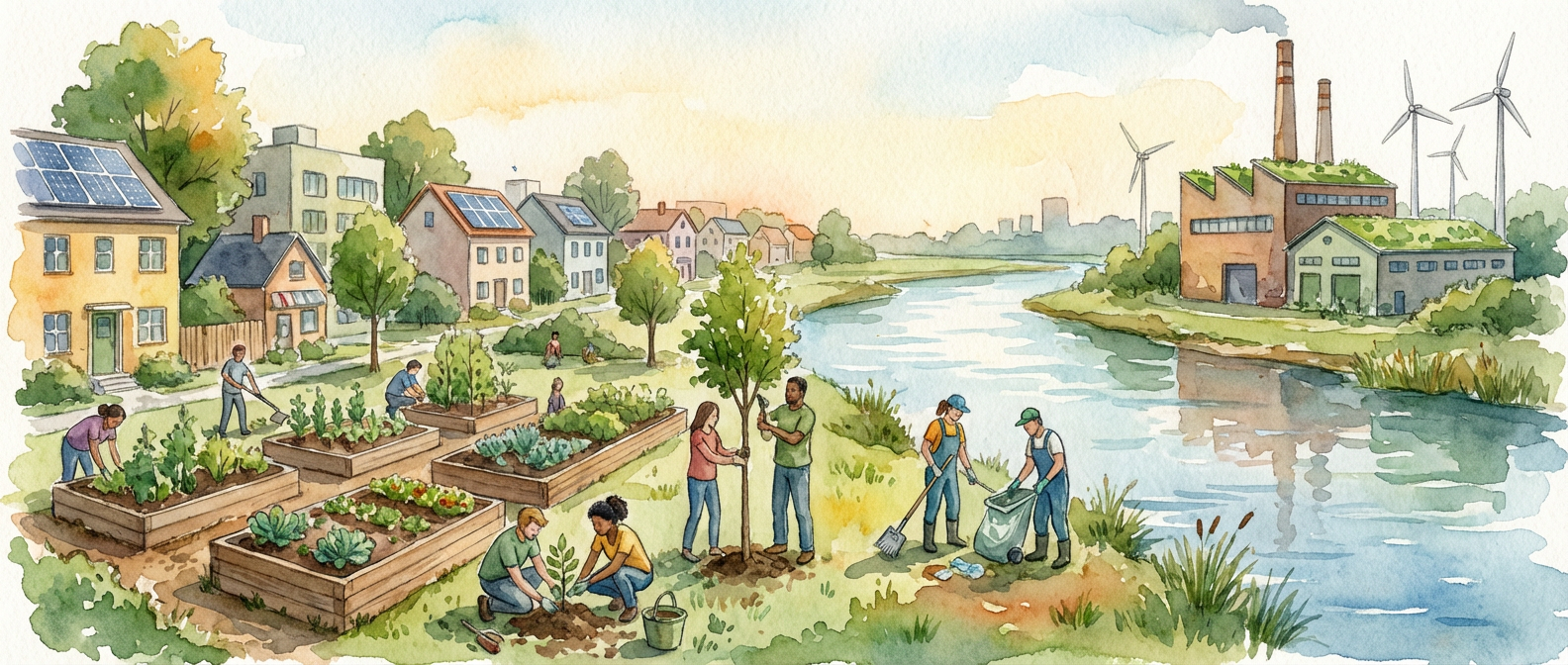
Here’s the thing about environmental justice work: the solutions often look smaller than the problems, but they add up. The Eastside Neighborhood Association figured this out three years ago when they started their block-by-block tree planting program. Not a grand restoration project with federal grants and ribbon cuttings. Just neighbors getting together on Saturdays to put native oaks and maples in every available spot.
They’ve planted 847 trees so far. The temperature readings on Maple Street dropped by three degrees last summer compared to 2021. Property values went up, but more importantly, kids started playing outside again. Mrs. Patterson on Oak Street says she sleeps with her windows open now instead of running the air conditioner all night.
The tree program works because it tackles the function Miller Creek used to handle: cooling air, filtering particles, creating spaces where people want to spend time. They’re not trying to bring back 1952. They’re building something better for 2024. The Eastside group shares their playbook with any neighborhood that asks. They’ve learned which species survive our clay soil, which spots the city will approve for planting, how to get free saplings from the county extension office.
Meanwhile, the Environmental Health Coalition convinced three businesses along the old creek route to switch from diesel delivery trucks to electric ones. It took eighteen months of meetings, presentations about tax incentives, and one very determined grandmother who showed up at every city council session with photos of her grandkid’s inhaler. Small changes, but they’re measurable. Maria’s air quality readings show the difference.
The Next Thing We Can Do
Next Tuesday, the Planning Commission reviews permits for a new logistics center on Industrial Boulevard. Right where Miller Creek used to curve north toward the old swimming hole. The company promises jobs, and we need jobs. But their environmental impact report glosses over air quality with regional averages instead of neighborhood-specific data.
This is where community memory becomes community power. The people who remember fishing in that creek, who know how much cooler it used to be on summer evenings, who understand that this isn’t just about nostalgia but about lung capacity and childhood asthma rates. They’re the ones who can speak up at public comment and ask the hard questions about truck routes and emission controls.
The Environmental Health Coalition put together a one-page fact sheet about what to ask for: electric vehicle charging stations for delivery trucks, green roof requirements that actually filter air, buffer zones with native plantings that can handle urban pollution. Not pie-in-the-sky demands, but specific standards that other cities have successfully implemented.
The meeting starts at 7 PM in Council Chambers. Public comment happens first. Three minutes per person. If twelve people show up with specific asks instead of general complaints, the commissioners have to respond on the record. If nobody shows up, the permit gets rubber-stamped and we get another diesel hub in a neighborhood that’s already carrying more than its share.
What We’re Building Back
Miller Creek isn’t coming back. The infrastructure changes would cost millions, displace dozens of businesses, require federal permits that take decades. But the functions that creek handled, those we can rebuild piece by piece, block by block, permit hearing by permit hearing.
The Eastside tree program is expanding to four more neighborhoods this spring. The air quality monitoring network now has volunteers in six different areas, creating a real-time map of where the problems are worst and where improvements actually work. The Environmental Health Coalition is launching a small business program to help local companies transition to cleaner delivery options.
This isn’t about returning to some imaginary golden age. It’s about learning from what worked, understanding what we lost, and building systems that help the people who live here now. Every tree planted, every electric truck that replaces a diesel one, every neighbor who learns to read air quality data and speaks up at city meetings. These aren’t compromises or half-measures. They’re how environmental justice actually happens: one concrete change at a time, in the places where people live and breathe and raise their kids.
If you want to know more about the tree planting program or get involved with air quality monitoring, the Environmental Health Coalition meets the first Thursday of every month at the community center. 6:30 PM, room B. Coffee and childcare provided. Because the best way to honor what we’ve lost is to build something better in its place.