What We Lost When Miller’s Hardware Closed
Miller’s Hardware closed three months ago. You probably drove past the empty storefront this week without thinking about it. But here’s what disappeared with those dusty aisles and the cash register that still used carbon paper: the only place in our neighborhood where you could buy a single bolt, get advice on fixing a wobbly table leg, and bump into your neighbor who’d mention the city’s planning to repave Elm Street.
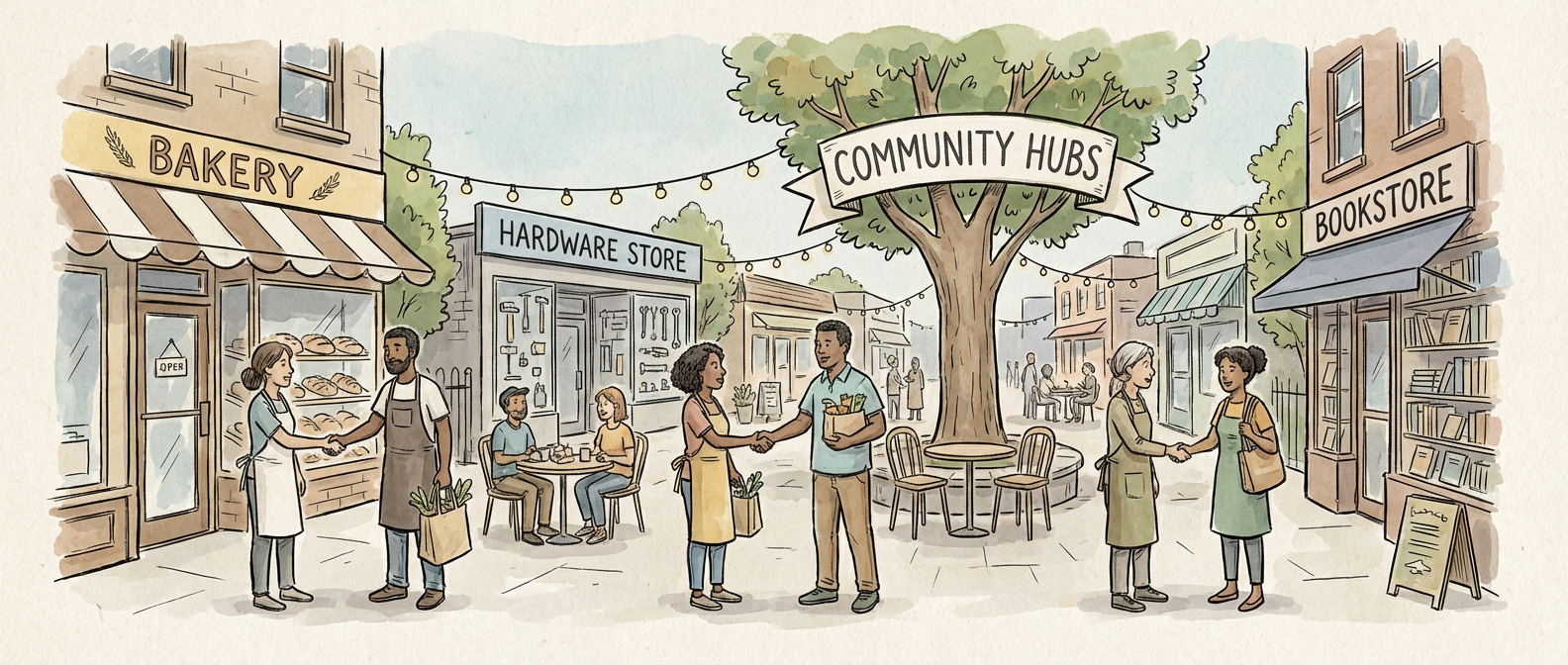
That combination isn’t available anywhere else now. Home Depot sells bolts in quantities of fifty. YouTube explains furniture repair without knowing your skill level or tools. NextDoor hosts arguments about street repairs instead of casual updates. We didn’t just lose a hardware store. We lost a piece of our neighborhood’s information network.
I’ve been tracking small business closures for the past year, reading through business license renewals in the city council packets. The pattern is depressing. We’re losing the businesses that do multiple things, the ones that accidentally became community hubs. Miller’s. Rosa’s corner market where people posted ride-share notices. The copy shop that let nonprofits use their scanner for free.

How Small Businesses Actually Function
Small neighborhood businesses don’t just sell products. They collect information. Rosa knew which streets flooded first during heavy rain because customers complained about getting their shoes soaked. The barber shop on Fifth Street tracked which houses were going up for sale months before the signs appeared. Miller’s could tell you which contractors in town actually showed up on time.
This information network matters for practical reasons. When the water main broke on Maple Avenue last spring, people who shopped at Rosa’s knew about it two hours before the city posted anything online. They could reroute their commutes, move cars off the street, and warn elderly neighbors. The information traveled through normal conversations, not emergency alerts.
Large chain stores don’t accumulate this kind of local knowledge. Their employees commute from other neighborhoods. Their computer systems track inventory, not community patterns. They’re built for efficiency, not for the slow accumulation of neighborhood wisdom that happens when the same people work in the same place for years.
The Collaboration Problem We’re Not Solving
Our small businesses are failing one by one when they could succeed together. I spent last Tuesday evening at the monthly merchant association meeting. Five people showed up. The agenda covered holiday decorations and complained about parking enforcement. Nobody talked about sharing customers, pooling resources, or coordinating inventory.
Meanwhile, three blocks away, residents pack community meetings to discuss traffic calming measures and park improvements. We’ve learned to collaborate on public space issues. We coordinate volunteer cleanups, advocate for crosswalk improvements, and organize block parties. But we haven’t applied that same collaborative energy to supporting the businesses that anchor our daily routines.
The disconnect is structural, not personal. Our neighborhood association focuses on residential concerns. The merchant association meets at times when working parents can’t attend. City economic development programs target downtown, not neighborhood commercial strips. Small business owners are solving problems alone that they could tackle together with community support.
What Actually Works (And What Doesn’t)
Shop local campaigns don’t work because they ask people to pay more for the same products while feeling good about it. That’s not sustainable behavior change. What works is making small businesses more useful, not just more virtuous. The cleaner that also accepts package deliveries stays busy. The coffee shop that hosts neighborhood association meetings builds regular customers. The pharmacy that offers blood pressure checks becomes essential.
Successful neighborhood business districts share customers and functions. In the Riverside district across town, the bookstore recommends the restaurant next door, which sources vegetables from the local market, which displays flyers for the bookstore’s author events. They’ve created an ecosystem where visiting one business naturally leads to visiting others.
The coordination happens through simple systems. Shared email lists for promoting events. Joint purchasing of seasonal decorations. Coordinated hours during holidays. Cross-referrals when customers need things they don’t provide. These aren’t revolutionary strategies. They’re basic business practices that require minimal time investment but create significant collective benefit.
Building What We Need
We can rebuild the information networks and collaborative systems that small businesses used to provide naturally. It requires connecting existing efforts instead of starting new programs. The monthly coffee meetup where people discuss city council agendas could rotate through different neighborhood businesses. The volunteer tree planting crew could grab lunch together afterward at local restaurants.
Small changes in our routines can strengthen business networks without requiring anyone to spend more money. Picking up prescriptions and groceries on the same trip supports both businesses. Mentioning useful services to neighbors creates word-of-mouth marketing that actually works. Attending public meetings at local businesses instead of city hall demonstrates community investment in those spaces.
The goal isn’t nostalgia for corner stores that never really existed in some idealized form. It’s building the functional networks that neighborhoods need: places to get information, solve problems, and maintain the informal connections that make communities work. Small businesses can provide these functions, but only if we design our daily routines to support them and help them support each other.
Next month’s neighborhood association meeting is scheduled for the community center again. I’m going to suggest we move it to the coffee shop on Cedar Street instead. Small step, but it’s a start. Want to help figure out what other small steps might work? I’ll be at that coffee shop Saturday morning at nine, probably reading through the latest city council packet and thinking through which other businesses we can visit afterward.