How a Traffic Experiment in Oxford Became a Global Conspiracy Theory
In 2022, Oxford, England tried something pretty straightforward. They launched a traffic filter pilot that restricted vehicle access to certain city zones during peak hours. The goal was simple enough: reduce congestion, improve air quality, make the neighborhood feel less like a parking lot. What happened next wasn’t simple at all. Over 100,000 people signed petitions against it. The story went global. And somehow, this local traffic experiment became the centerpiece of a sprawling conspiracy theory that has now landed squarely in American city council chambers.

Here’s what actually happened versus what people thought happened. The real pilot was about managing traffic flow in a dense urban area. The conspiracy narrative that spread online claimed it was a plot to confine residents to small zones, eliminate car ownership, and control movement. None of that was remotely true, but the misinformation stuck. It mutated. It crossed the Atlantic. And now it’s influencing policy decisions in your hometown.
The Organized Misinformation Campaign Is Real and Documented
This isn’t speculation or politics as usual. In March 2025, researchers at the Institute for Strategic Dialogue Misinformation Research released a report documenting exactly what’s happening. They tracked 47 separate U.S. city council meetings across 19 states where people showed up with prepared talking points about 15-minute cities. Same rhetoric. Same fears. Different cities. That’s the fingerprint of a coordinated campaign, not organic concern.
The timing matters too. These appearances ramped up throughout 2025, not randomly. Groups started showing up at planning commission meetings with stacks of printed materials. Social media posts started hitting at scale right before public hearings. Someone was organizing this. And the planners actually trying to do their jobs were caught in the middle.
The American Planning Association on 15-Minute Cities surveyed their members in 2025 and found that 61 percent of urban planners reported encountering organized misinformation at public hearings. That was up from 29 percent just two years earlier. Double. In two years. That’s not a trend. That’s a shift.
Portland’s Six-Month Delay Shows the Real Cost
Portland, Oregon wanted to zone neighborhoods for mixed-use development. More housing options. More walkability. Standard stuff that most cities are considering right now. In 2025, they proposed what they called a Complete Neighborhoods rezoning initiative. It was moderate urban planning, nothing revolutionary. Then the misinformation campaign hit local social media, and residents started showing up to meetings absolutely convinced that the city was about to restrict their driving.
The narrative was false. The proposal never attempted to limit where people could drive. But enough people believed it that the city council delayed the project by six months. Six months. That’s half a year of housing shortage continued. Half a year of people commuting longer. Half a year of someone’s actual life disrupted by false claims about a zoning proposal.
What actually happened in Portland shows how this plays out on the ground. City staff had to spend months just correcting misinformation. They had to produce fact sheets, hold extra community meetings, rebuild trust with people who’d been told lies by strangers on the internet. That’s not governance. That’s a resource management crisis.
The Walkable Neighborhoods Are Actually Where Property Values Grow
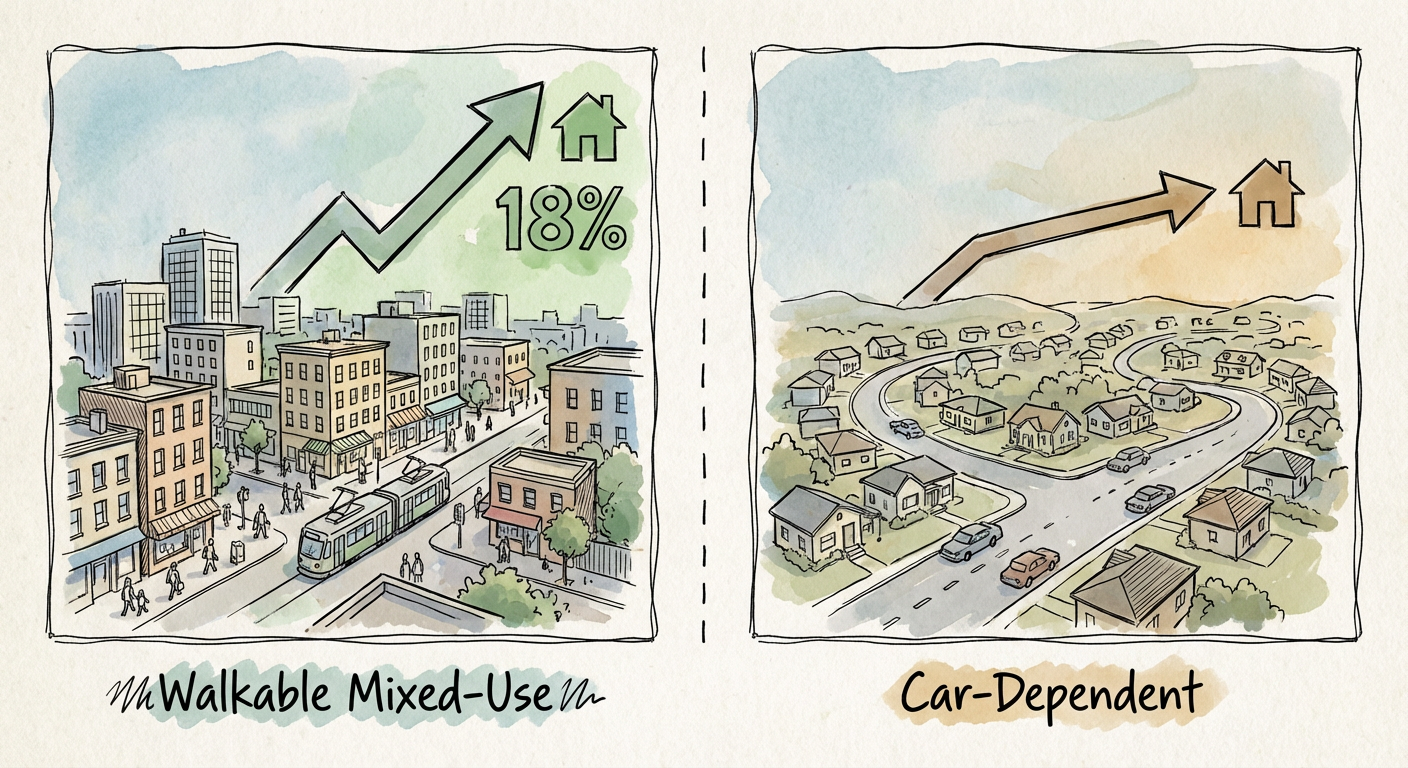
Here’s the thing people don’t seem to know. Research published in the Journal of Urban Affairs in late 2025 found that walkable neighborhoods with mixed-use zoning saw median home values increase 18 percent faster than car-dependent suburbs between 2020 and 2024. That’s real data. Not opinions. Not politics. Just what happened to property values.
So the conspiracy narrative says 15-minute cities will destroy your neighborhood. The actual market data says walkable neighborhoods are where wealth is being created right now. Your home appreciates faster. Your kids have more options within reach. Your life gets simpler. But that story doesn’t travel as well on social media as fear does.
The disconnect is wild. People are fighting against proposals that would actually increase their property values because they’ve been convinced those proposals are imprisoning them. That’s not rational self-interest. That’s what happens when a coordinated campaign is designed to confuse.
What Your Town Can Actually Do About This
If your city is considering any kind of walkability initiative or urban planning reform right now, expect this to show up. You don’t have to be surprised by it. You can prepare. Look at what Portland did wrong, not because it’s shameful, but because you can learn from it. Get ahead of the misinformation. Host multiple community meetings early. Be specific about what you’re proposing and what you’re not. Have data ready. Make your planning staff visible and accessible.
The real organizing that needs to happen isn’t the conspiracy spreading. It’s the actual community work that cities do. Talk to your neighbors about what you actually want your neighborhood to be. Read your city council minutes. Show up to planning commission meetings. That work is boring and unglamorous compared to outrage on social media. It’s also the only thing that actually shapes your town.
This is happening now in at least 19 states. The question isn’t if your town is next. It’s whether you’ll be ready when it arrives. Stay informed. Stay engaged. Help your neighbors separate what’s real from what’s been designed to confuse. If you’re reading this and thinking about starting to pay attention to your local planning process, now is exactly the time. Your council could use someone who actually reads the minutes.