When the Lot Spoke Back
Maria Gonzalez first noticed the weeds in February. Not the scraggly dandelions most people ignore, but the way they’d organized themselves in neat rows across the abandoned lot on Maple Street. “Like they were waiting for someone to pay attention,” she tells me, gesturing toward what’s now a thriving community garden that feeds forty-three families.
The lot had been empty since 2019, when the old Murphy’s Hardware finally closed. City records show it bounced between three different development proposals before landing in bureaucratic limbo. Maria, who works the early shift at the hospital, walked past it every morning on her way to the bus stop. “I kept thinking about my grandmother’s garden in El Salvador. How she fed half the neighborhood with one small plot.”
That’s when she started showing up to city council meetings. Not the heated ones that make the local news, but the regular Tuesday morning sessions where they discuss zoning variances and street maintenance schedules. “Nobody else was there except Mr. Peterson, who comes to complain about parking meters,” Maria laughs. “And suddenly I’m asking about soil testing and community land use permits.”

The Spreadsheet That Changed Everything
Sarah Kim joined the effort in March, armed with the kind of color-coded spreadsheet that makes city planners weep with joy. A software developer who’d moved to the neighborhood six months earlier, she’d been looking for ways to meet people beyond the coffee shop small talk. “Maria had the vision, but someone needed to figure out the logistics,” Sarah explains.
Her research revealed that the city’s Community Gardens Program had been quietly updated the previous fall. New rules allowed for faster permitting on lots under two acres, provided the applicants could demonstrate neighborhood support and basic environmental stewardship knowledge. “It was buried in a 47-page document about municipal land use. I probably would have missed it if I hadn’t been reading everything twice.”
The two women spent April mapping out possibilities. Raised beds for accessibility. A shared tool shed. Rain collection barrels. Native plant borders to support local pollinators. Sarah’s technical background meant she could draft proper site plans, while Maria’s three decades in the neighborhood gave her the relationships that would make or break the project.
The Power of Showing Up
By May, they had twelve families interested and a petition with eighty-seven signatures. But the real breakthrough came when they started attending the monthly Parks and Recreation committee meetings. Committee chair Janet Walsh had been pushing for more green space initiatives for years, often to empty rooms and polite indifference.
“Janet lit up when we presented the proposal,” Sarah remembers. “She’d been pushing similar projects for ages, but this was the first time community members had done the groundwork themselves.” Walsh fast-tracked their application through the approval process, connecting them with the city’s sustainability coordinator and helping them navigate the insurance requirements that typically stall these projects.
The key insight was understanding that city officials aren’t obstacles by default. They’re often waiting for residents who’ve done their homework and can speak the language of municipal planning. “Once we learned to talk about ‘environmental impact mitigation’ instead of ‘pretty flowers,’ everything moved faster,” Maria notes.
Ground broke in July. The first tomatoes were harvested in September. By October, the waiting list for garden plots stretched to thirty-five names, and the Tuesday morning planning meetings had evolved into Saturday potlucks that regularly draw fifty neighbors.
Beyond the Vegetables
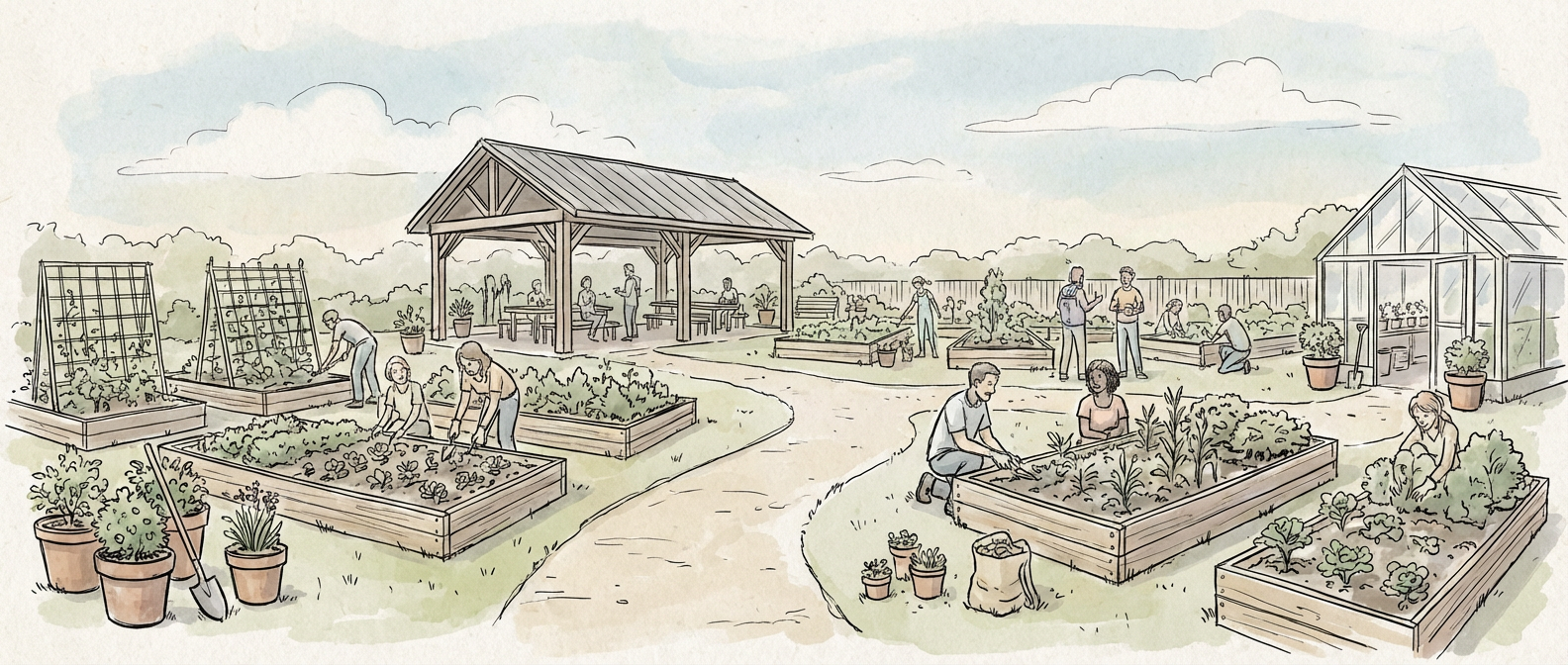
Walk through the Maple Street Community Garden today and you’ll see the obvious wins. Neat rows of winter squash and late-season greens. A greenhouse built from salvaged windows that local contractor David Ross donated after his kitchen renovation. Kids from the elementary school two blocks away tending the butterfly garden they planted as part of their science curriculum.
But the subtler changes matter more. Mrs. Chen, who’d lived on the block for fifteen years without knowing her neighbors’ names, now runs the seed-sharing library. Teenagers who used to treat the lot as a shortcut now stop to help elderly gardeners carry their harvest home. The informal network that developed around sharing tools and comparing pest control strategies has become a resource for everything from babysitting exchanges to job referrals.
“We solved the food access issue, but we accidentally built something bigger,” Maria reflects. “People feel more connected to where they live. They pay attention to city council decisions because they understand how policy affects their daily lives.”
The garden’s success has inspired similar projects across the city. Three new community gardens opened this year, and the Parks department has streamlined the application process based on lessons learned from the Maple Street experience. What started as one woman noticing weeds has become a template for grassroots civic engagement that actually works.
The Tuesday Morning Test
The next city council meeting is December 10th, 9 AM at City Hall. Coffee’s usually pretty bad, but the agenda includes updates on the proposed bike lane extensions and the new affordable housing development near the library. Maria will be there, probably with questions about maintenance budgets and community input processes.
Sarah’s working on a proposal for tool-lending libraries in all city parks, complete with cost analysis and implementation timelines. She’s learned that city officials respond better to specific solutions than general complaints, and she’s gotten good at translating community needs into policy language.
The Maple Street garden closes for the season next month, but the planning never stops. Winter meetings will focus on expanding the composting program and designing a rainwater management system that could work as a model for other neighborhoods dealing with storm water runoff.
If you’re curious about what’s possible in your own neighborhood, start small. Read the meeting minutes. Show up with questions. Bring a friend who’s good with spreadsheets. Pay attention to the empty lots and overlooked spaces around you. Sometimes the most revolutionary act is simply noticing what’s already there, waiting for someone to care enough to do something about it.