The Numbers That Actually Matter
Last month I sat in on a city planning meeting where the debate got heated—not metaphorically. A council member presented new data showing that neighborhoods across town experience wildly different summer temperatures. The difference wasn’t small. It was 5 to 7 degrees Fahrenheit. That’s not just uncomfortable. That’s the gap between a manageable summer and one where your electric bill doubles and elderly neighbors become genuinely vulnerable.
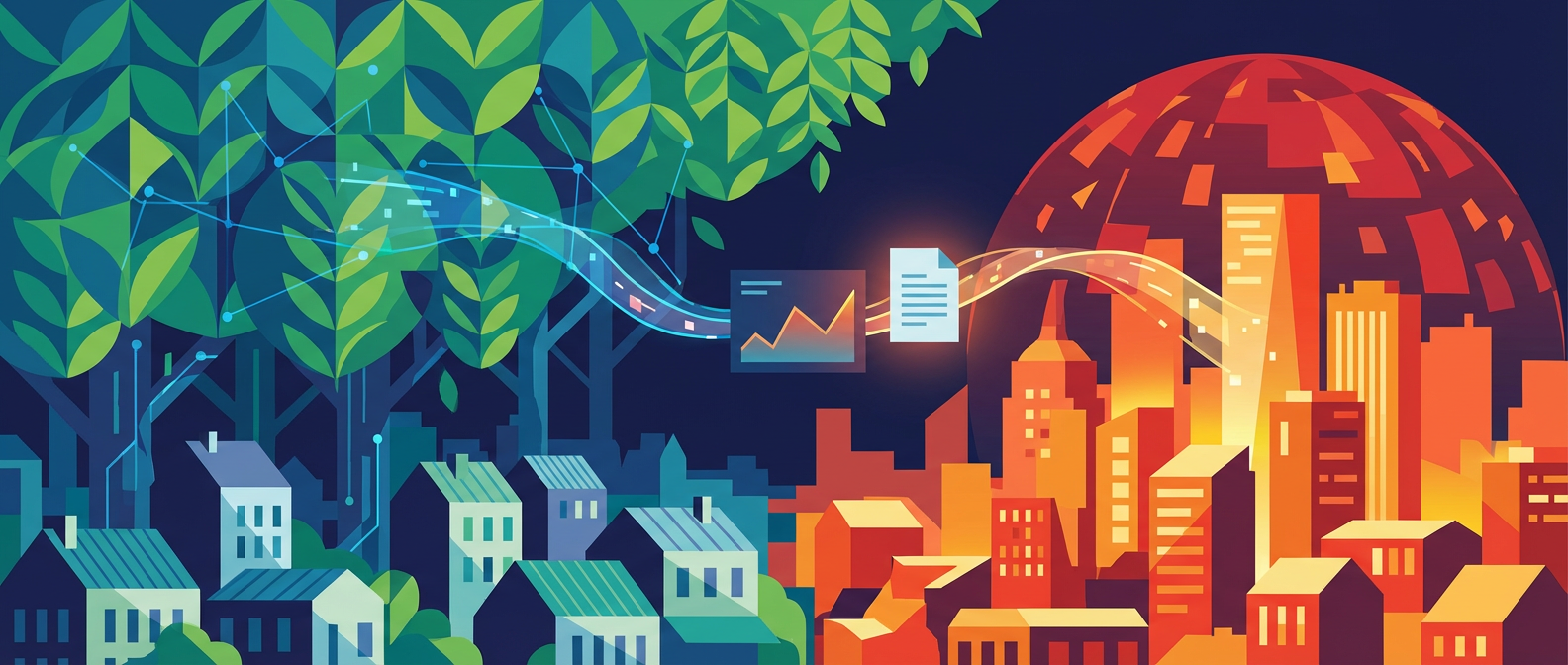
Here’s what NOAA’s 2025 Urban Climate Report found: cities with less than 20% tree canopy coverage run significantly hotter than their rural surroundings during peak summer months. The mechanism is straightforward but often overlooked. Pavement, roofing, and exposed soil absorb and radiate heat. Trees don’t. They create shade and release moisture through transpiration. It’s basic physics. It’s also policy. Because where tree canopy exists, and where it doesn’t, is rarely accidental.
Who Gets to Live in the Shade
The real tension in that council meeting emerged when someone brought up the equity data. American Forests released their 2025 Tree Equity Score analysis, and the findings were stark: low-income neighborhoods in the same city have roughly 33% less tree canopy than wealthy neighborhoods. Not in different cities. In the same city. On opposite sides of the same highway.
This is where people start disagreeing, and it’s worth understanding why everyone involved isn’t entirely wrong. Wealthy neighborhoods often have older housing stock with mature trees planted decades ago. They also have property owners with resources to maintain and plant trees. That’s not a conspiracy. It’s how accumulated advantage works. But that same mechanism means lower-income areas, sometimes newer development, sometimes older areas where trees were cleared for industrial purposes, start behind and stay behind. The American Forests Tree Equity Score quantifies this disparity. The harder question is what to do about it.
Some argue the solution is purely market-based: let property owners plant what they want. Others say that leaves entire neighborhoods to suffer through summers that are measurably hotter than communities a few blocks away. Both perspectives contain truth. Market forces alone haven’t solved this. Public investment apparently hasn’t either, at least not yet. That’s the conflict worth understanding.
What Trees Actually Do to Your Utility Bill
The EPA has run the numbers on strategic tree planting, and the efficiency gains are hard to ignore. Up to 9 degrees Fahrenheit of cooling in peak summer. Air conditioning energy use cut by 15 to 35 percent. These aren’t abstract benefits. They’re measurable reductions in energy costs during the months when people are already stretched financially. For renters in hot neighborhoods, this matters enormously. For homeowners, it affects their ability to afford where they live.
Scientists at landscape ecology research programs have confirmed this with precision: every 10% increase in tree cover across urban land correlates with a 0.6 degree Celsius reduction in surface temperature. That’s real climate adaptation happening at neighborhood scale. It doesn’t replace structural energy policy or renewable energy infrastructure. It’s something different. Something neighbors can literally plant and maintain together.
Money on the Table Right Now
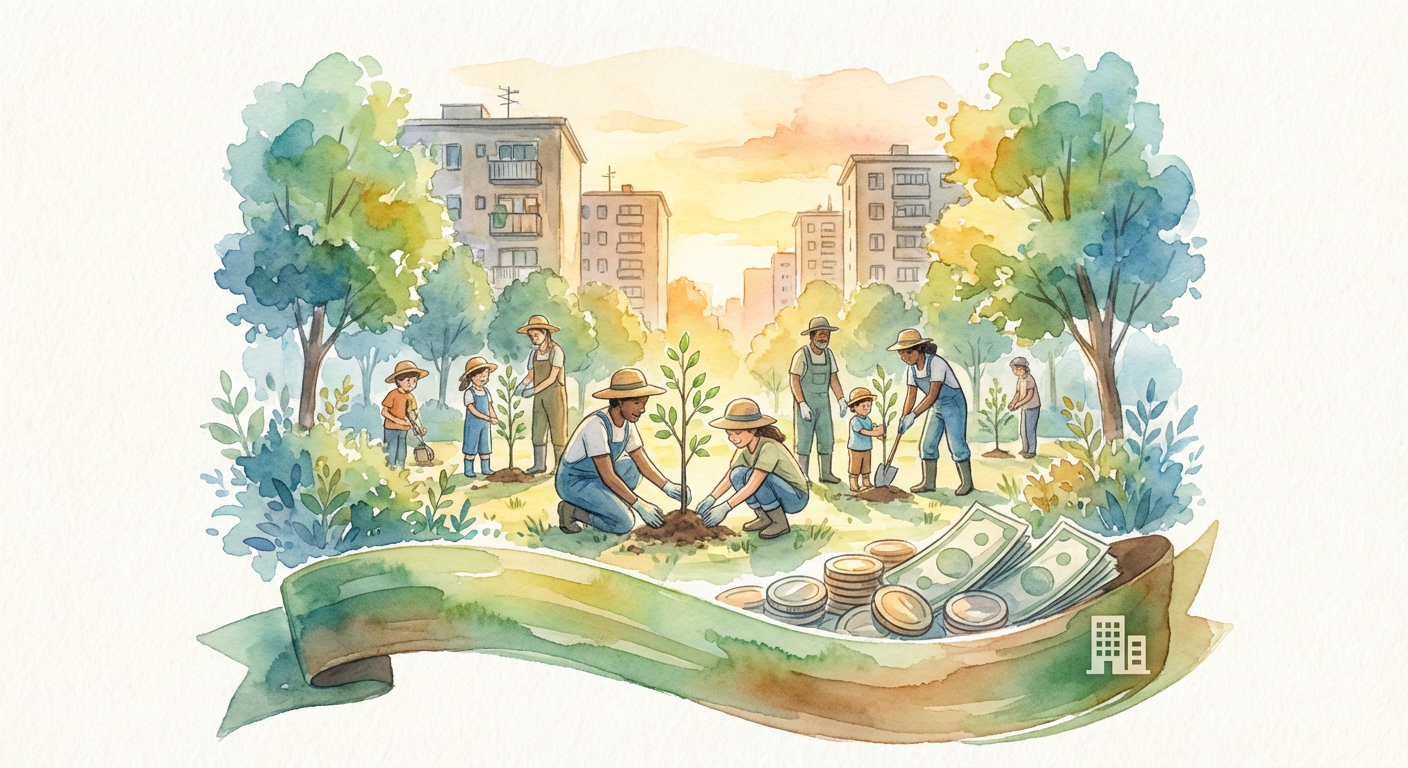
This is where the conversation shifts from problem identification to actual possibility. The USDA Forest Service’s Urban and Community Forestry Program distributed $105 million in grants during 2025 under the Inflation Reduction Act, specifically targeted at expanding tree canopy in disadvantaged communities. That’s real funding. It exists. Most people don’t know about it because city communications don’t prioritize announcing it widely. Some neighborhoods have already organized to access portions of it. Others haven’t.
Here’s where disagreement becomes structural rather than personal. Some neighborhoods have established tree-planting organizations. Some have residents with time to navigate grant applications. Some have community organizers who know how to make this happen. Others don’t. That’s not because those neighborhoods don’t want trees. It’s because accessing public money requires capacity that correlates strongly with existing resources. The USDA Urban and Community Forestry Program wants to fund this work. But intention and accessible implementation remain two different things.
What Actually Happens Next
The council member who presented the temperature data proposed something specific: dedicated staff at the city level to help neighborhoods apply for available grants. Not a massive budget increase. Not revolutionary policy. Just someone whose job is to know about funding programs and help communities access them. It didn’t pass unanimously. One council member worried about creating expectation for ongoing city support. Another worried the money wouldn’t reach the neighborhoods that need it most without clearer accountability measures.
Both concerns are legitimate. Both also become reasons to do nothing, which guarantees the current inequity persists. The missing piece isn’t technical knowledge or funding. It’s decision-making. Cities can choose to staff this work. Neighborhoods can choose to organize. People can choose to show up on Saturday with a shovel and a newly planted sapling. None of that requires invention. It requires prioritization.
If you live in a neighborhood without much tree canopy, your summers are measurably hotter. That’s not your imagination. That’s data. Check your city’s grant opportunities. Find out who else is thinking about this. Most cities have council members who read community messages and actually respond. The trees aren’t just for your comfort. They’re also policy, waiting for someone to decide they matter enough to plant.