Your Neighborhood’s Tree Canopy Is a Climate Policy: Breaking Down the 2025 Urban Heat Island Data

The Numbers That Actually Matter

Last month I sat in on a city planning meeting where the debate got heated—not metaphorically. A council member presented new data showing that neighborhoods across town experience wildly different summer temperatures. The difference wasn’t small. It was 5 to 7 degrees Fahrenheit. That’s not just uncomfortable. That’s the gap between a manageable summer and one where your electric bill doubles and elderly neighbors become genuinely vulnerable.

Your Neighborhood's Tree Canopy Is a Climate Policy: Breaking Down the 2025 Urban Heat Island Data
Your Neighborhood’s Tree Canopy Is a Climate Policy: Breaking Down the 2025 Urban Heat Island Data

Here’s what NOAA’s 2025 Urban Climate Report found: cities with less than 20% tree canopy coverage run significantly hotter than their rural surroundings during peak summer months. The mechanism is straightforward but often overlooked. Pavement, roofing, and exposed soil absorb and radiate heat. Trees don’t. They create shade and release moisture through transpiration. It’s basic physics. It’s also policy. Because where tree canopy exists, and where it doesn’t, is rarely accidental.

Illustration for Your Neighborhood's Tree Canopy Is a Climate Policy: Breaking Down the 2025 Urban Heat Island Data
Illustration for Your Neighborhood’s Tree Canopy Is a Climate Policy: Breaking Down the 2025 Urban Heat Island Data

Who Gets to Live in the Shade

The real tension in that council meeting emerged when someone brought up the equity data. American Forests released their 2025 Tree Equity Score analysis, and the findings were stark: low-income neighborhoods in the same city have roughly 33% less tree canopy than wealthy neighborhoods. Not in different cities. In the same city. On opposite sides of the same highway.

This is where people start disagreeing, and it’s worth understanding why everyone involved isn’t entirely wrong. Wealthy neighborhoods often have older housing stock with mature trees planted decades ago. They also have property owners with resources to maintain and plant trees. That’s not a conspiracy. It’s how accumulated advantage works. But that same mechanism means lower-income areas, sometimes newer development, sometimes older areas where trees were cleared for industrial purposes, start behind and stay behind. The American Forests Tree Equity Score quantifies this disparity. The harder question is what to do about it.

Some argue the solution is purely market-based: let property owners plant what they want. Others say that leaves entire neighborhoods to suffer through summers that are measurably hotter than communities a few blocks away. Both perspectives contain truth. Market forces alone haven’t solved this. Public investment apparently hasn’t either, at least not yet. That’s the conflict worth understanding.

What Trees Actually Do to Your Utility Bill

The EPA has run the numbers on strategic tree planting, and the efficiency gains are hard to ignore. Up to 9 degrees Fahrenheit of cooling in peak summer. Air conditioning energy use cut by 15 to 35 percent. These aren’t abstract benefits. They’re measurable reductions in energy costs during the months when people are already stretched financially. For renters in hot neighborhoods, this matters enormously. For homeowners, it affects their ability to afford where they live.

Scientists at landscape ecology research programs have confirmed this with precision: every 10% increase in tree cover across urban land correlates with a 0.6 degree Celsius reduction in surface temperature. That’s real climate adaptation happening at neighborhood scale. It doesn’t replace structural energy policy or renewable energy infrastructure. It’s something different. Something neighbors can literally plant and maintain together.

Money on the Table Right Now

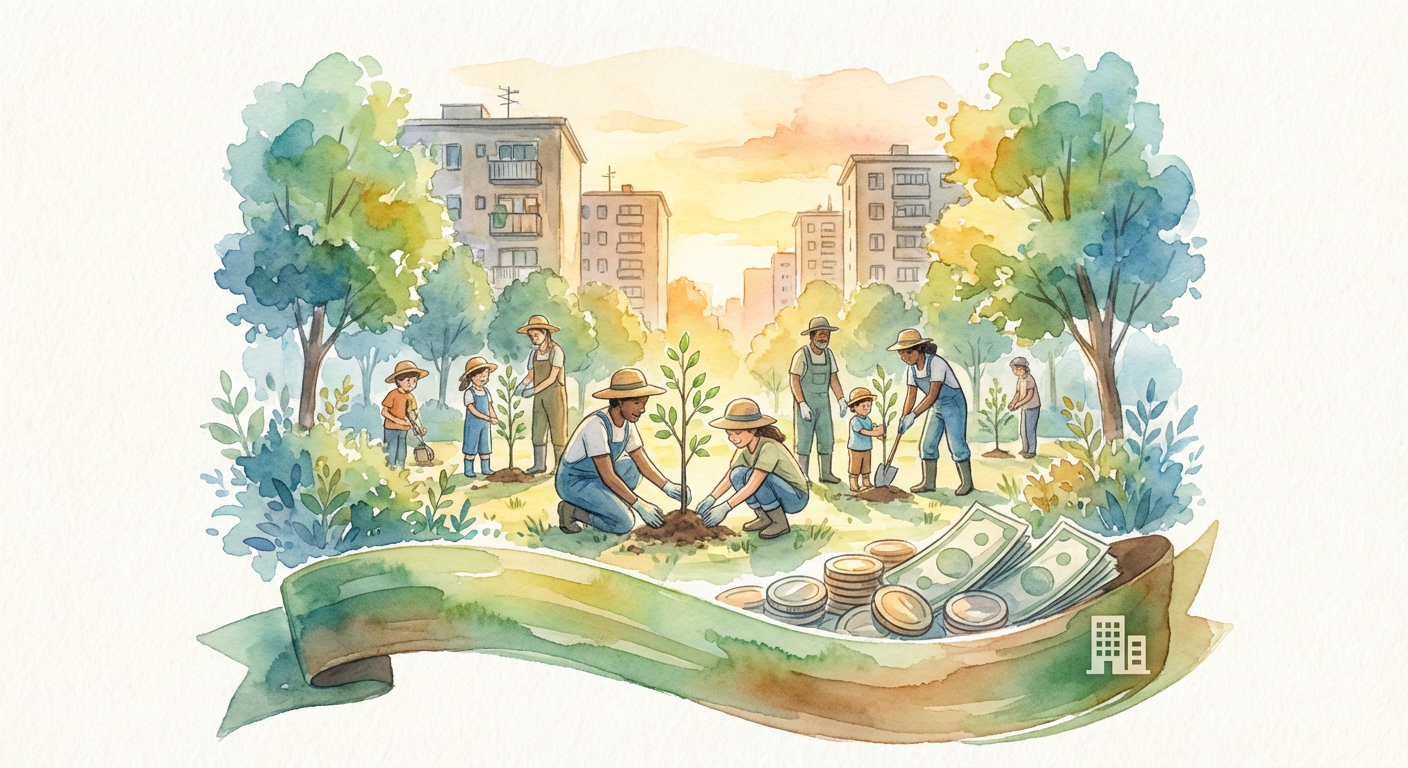
This is where the conversation shifts from problem identification to actual possibility. The USDA Forest Service’s Urban and Community Forestry Program distributed $105 million in grants during 2025 under the Inflation Reduction Act, specifically targeted at expanding tree canopy in disadvantaged communities. That’s real funding. It exists. Most people don’t know about it because city communications don’t prioritize announcing it widely. Some neighborhoods have already organized to access portions of it. Others haven’t.

Here’s where disagreement becomes structural rather than personal. Some neighborhoods have established tree-planting organizations. Some have residents with time to navigate grant applications. Some have community organizers who know how to make this happen. Others don’t. That’s not because those neighborhoods don’t want trees. It’s because accessing public money requires capacity that correlates strongly with existing resources. The USDA Urban and Community Forestry Program wants to fund this work. But intention and accessible implementation remain two different things.

What Actually Happens Next

The council member who presented the temperature data proposed something specific: dedicated staff at the city level to help neighborhoods apply for available grants. Not a massive budget increase. Not revolutionary policy. Just someone whose job is to know about funding programs and help communities access them. It didn’t pass unanimously. One council member worried about creating expectation for ongoing city support. Another worried the money wouldn’t reach the neighborhoods that need it most without clearer accountability measures.

Both concerns are legitimate. Both also become reasons to do nothing, which guarantees the current inequity persists. The missing piece isn’t technical knowledge or funding. It’s decision-making. Cities can choose to staff this work. Neighborhoods can choose to organize. People can choose to show up on Saturday with a shovel and a newly planted sapling. None of that requires invention. It requires prioritization.

If you live in a neighborhood without much tree canopy, your summers are measurably hotter. That’s not your imagination. That’s data. Check your city’s grant opportunities. Find out who else is thinking about this. Most cities have council members who read community messages and actually respond. The trees aren’t just for your comfort. They’re also policy, waiting for someone to decide they matter enough to plant.

Your Vacant Lot Could Become a Community Asset. Here’s How Cities Are Actually Making It Happen

The Money is Real, and It’s Arriving Now

Let’s start with the thing that actually matters: there is significant federal funding available right now, and your city might already be positioned to access it. The EPA’s Brownfields Program received $1.5 billion through the Bipartisan Infrastructure Law, with $233 million awarded in the most recent competitive grant cycle across 322 projects. That is not theoretical. That is money moving through the system in 2025.

But here’s the honest part: not every city knows how to grab it. The brownfields sitting in your neighborhood are part of a larger problem. The National Community Reinvestment Coalition identified roughly 70,000 brownfield and vacant sites across American cities, with a total remediation and redevelopment cost estimated at $209 billion. That gap between available funding and actual need is real. But it’s also shrinking, and that matters for places like yours.

What Actually Happens When a Lot Gets Transformed

You need concrete evidence that this works, not cheerleading. Research from the Trust for Public Land Research team tracked what happened in Philadelphia when vacant lots were converted into green spaces. Within two years, surrounding blocks showed a 29% reduction in gun violence and a 41% decrease in resident-reported stress levels. Those are not soft outcomes. Those are measurable changes in how people actually experience their neighborhoods.

Detroit offers another useful model. Their Strategic Neighborhood Fund converted 1,400 vacant parcels between 2023 and 2025. The breakdown: 62% became community gardens, pocket parks, or affordable housing. Thirty-eight percent went to commercial development. One approach isn’t universally correct, but cities do have choices about what gets built, and those choices shape what kind of neighborhood emerges.

Why Some Cities Move Fast and Others Don’t

A recent study from the Lincoln Institute of Land Policy found something surprisingly actionable: cities with unified vacant land databases and streamlined acquisition processes completed brownfield projects 2.3 years faster than those without them. Two years is not a minor difference. That is the difference between a lot sitting empty while your kid grows from six to eight, versus watching it become a place where you actually spend Saturday mornings.

What does “streamlined” actually mean? It means your city has a single digital system showing which lots are city-owned, which are in tax foreclosure, which are privately held but abandoned. It means someone owns the problem across departments instead of it bouncing between planning and parks and community development. It means the application process for a community group to take over a lot does not require a lawyer and a miracle.

Check if your city has this. Look at your municipal website. Call your planning department. Ask if there is a central vacant land inventory. If the answer is vague or takes three transfers to get, you have found a bottleneck. That is information you can actually use.

How to Position Your Neighborhood Right Now

Start by knowing what you are working with. Walk your blocks with a phone or notebook. Document the vacant lots. Are they fenced or open? Littered or relatively clean? Adjacent to residential areas, schools, or commercial strips? This basic inventory is your foundation. You do not need to be a planner. You need to be observant.

Next, find out who owns the property. County assessor websites are public. Search the address. Some lots are city-owned (easier), some are in private hands with back taxes owed (complicated but possible), some are actively litigated (hard). Knowing the ownership status changes what solutions are realistic for your neighborhood.

Then, look at what your city has already applied for. Check the EPA Brownfields Program website for funded projects. Has your city gotten grants? What did they propose? What did they actually build? This tells you whether your municipal leadership understands these opportunities exist and whether they have capacity to manage them.

What You Can Actually Do This Week

Request your city’s current brownfields or vacant land strategic plan. Most medium and large cities have one. If they do not, that is a conversation to start having at a city council meeting or with your council member. Bring that question to your next neighborhood association meeting. You will be surprised how many people have been thinking about the same lot.

Connect with community land trusts or local nonprofits already doing this work in your region. They understand the process. They have relationships with city staff. They can tell you which lots are realistic and which are tied up in litigation. They know whether your city is hungry for grant applications or already overwhelmed.

Document what you actually want the lot to become. A community garden requires different infrastructure than a pocket park, which differs from affordable housing. Think about what your neighborhood is missing. What would make a real difference in your daily life? That specificity matters when funding opportunities arise.

The vacant lots in your city are not going to fix themselves. The federal funding is real, the examples of success are documented, and the tools exist for cities to move faster. What’s missing is often not money or proof of concept. It is pressure. It is attention. It is you reading the city council minutes and asking questions. Community members showing up with ideas and following through. That part is still on us.

14 Cities Just Changed the Renter Game. Here’s What Actually Happened and Why Your City Should Care

The Year Renters Started Winning Back Some Power

Fourteen U.S. cities passed new or strengthened tenant protection ordinances in 2025. That number might not sound like much until you realize these cities represent millions of people and sent a message that housing isn’t just a market commodity anymore. It’s a right worth fighting for in city council chambers.

14 Cities Just Changed the Renter Game. Here's What Actually Happened and Why Your City Should Care
14 Cities Just Changed the Renter Game. Here’s What Actually Happened and Why Your City Should Care

These ordinances aren’t all the same. Some cities focused on just-cause eviction rules, meaning landlords can’t remove tenants on a whim. Others tackled rent stabilization or gave tenants the right to have a lawyer present during eviction proceedings. A few did the hard work of combining multiple protections into something genuinely comprehensive. What they share is this: people who were losing their homes got tired of it, organized with their neighbors, and made their local governments listen.

The timing matters. Eviction filings have roared back to alarming levels across the country. According to the Eviction Lab Real-Time Data Dashboard at Princeton University, eviction filing rates in 2025 exceeded pre-pandemic averages in 27 of the 34 cities they track closely. Some Sun Belt cities are running 40 percent above their 2019 baselines. The crisis didn’t go away. It just got worse for people already on the edge.

Illustration for 14 Cities Just Changed the Renter Game. Here's What Actually Happened and Why Your City Should Care
Illustration for 14 Cities Just Changed the Renter Game. Here’s What Actually Happened and Why Your City Should Care

Minneapolis Figured Out Something Worth Copying

Minneapolis did something bold with its Right to Counsel ordinance: they actually funded it fully. Four point two million dollars annually. Not a promise. Not a maybe. Real money to make sure tenants facing eviction can afford lawyers.

The results speak for themselves. In the first reporting period after the ordinance took effect, represented tenants avoided eviction eighty-four percent of the time. For unrepresented tenants, that number dropped to twenty-seven percent. Think about that gap for a moment. Having a lawyer in the room changes everything because suddenly you’re not a problem to be solved. You’re a person with rights and someone trained to articulate them.

This isn’t complicated magic. It’s not even surprising. When you give someone actual tools to defend themselves in a system designed by professionals and stacked with legal language, outcomes improve. The surprise is how rarely cities do this basic thing. Most don’t. Minneapolis did, and now they have data showing it works.

The Math Nobody Wants to Hear But Everyone Needs to Know

Here’s where things get uncomfortable. The National Low Income Housing Coalition released their 2025 Out of Reach report and the numbers are brutal. A renter needs to earn at least thirty-two dollars and eleven cents per hour to afford a modest two-bedroom apartment at fair market rent nationally. Not a fancy apartment. Not in a trendy neighborhood. A modest one. And not a single state minimum wage reaches that threshold.

That’s the floor problem. You can pass all the tenant protections in the world, but if people’s wages don’t match their rent, you’re rearranging deck chairs on a sinking ship. The fourteen cities that passed ordinances in 2025 understand this. They’re not pretending eviction protection is the only answer. But they also know it’s part of the answer. It buys people time. It keeps families in homes while they’re trying to solve the bigger economic problem.

Check the National Low Income Housing Coalition Out of Reach 2025 report yourself. See what the number is for your state, your region. Knowing it is the first step to taking it seriously.

St. Paul Proved Rent Stabilization Actually Works

St. Paul amended its rent stabilization ordinance in 2023, and when the University of Minnesota’s Center for Urban and Regional Affairs evaluated it in 2025, they found something real: a six percent reduction in displacement of low-income renters in rent-stabilized units. Six percent might sound small until you translate it into actual people staying in their homes instead of joining the shuffle of the displaced.

That evaluation matters because rent stabilization gets criticized as experimental, uncertain, possibly harmful. St. Paul’s data suggests it actually protects people. Not perfectly. Not completely. But measurably. That’s more than most housing policies can claim.

The reason this works is straightforward. When landlords can’t raise rent beyond a certain percentage annually, tenants can stay longer. They can invest in their communities. Their kids stay in the same school. They don’t spend all their energy scrambling to find their next apartment. That stability ripples outward into everything else in a person’s life.

What Happens Now Is Up to You

The fourteen cities that passed ordinances in 2025 gave us something valuable: a blueprint and proof that organizing works. You can read their ordinances. You can attend your city council meetings and ask why your city hasn’t done the same. You can talk to your neighbors about what they’re experiencing with rent and eviction.

This isn’t about waiting for federal solutions or hoping the market corrects itself. It’s about people showing up to local government and saying we need this. Minneapolis did it. St. Paul did it. Fourteen cities did it. The infrastructure is there. The data is there. The knowledge exists about what actually protects renters.

If you’ve read this far, you probably care about housing justice or know someone who’s been pushed out by rising rent. Either way, you have more power in this than it feels like. Start small. Read your city council minutes over coffee. Ask one question at one meeting. Talk to two neighbors about what they’re facing. Then figure out what comes next. That’s how the fourteen cities got here. That’s how your city gets there too.

The Smart Streetlight Comes to Your Block: What Your City Council Actually Voted For

The Thing Nobody Mentions at the Budget Meeting

Your city council approved a new streetlight system last month. Maybe you saw it in the agenda. Maybe you didn’t. Either way, the trucks are probably already here, swapping out those old sodium-vapor fixtures for sleek LED units that talk to each other through wireless networks. They’re calling it a smart streetlight program. It saves money. It’s modern. It’s efficient.

The Smart Streetlight Comes to Your Block: What Your City Council Actually Voted For

Here’s what nobody’s saying out loud: it’s also collecting data about when you leave your house, which streets you walk down, and whether you’re alone or with someone else.

This isn’t conspiracy thinking. This is what’s actually in the contracts. Over 400 U.S. municipalities have deployed these networked LED systems by early 2026, and most people installing them are genuinely trying to cut their electricity bills. The problem is that the same hardware that dims lights when nobody’s around can also feed real-time video and sensor information to whoever has access to the network. And spoiler alert: that might not just be your city.

The Math Is Real, But So Is the Catch

Let’s start with what’s actually true about these systems. They work. Municipal energy costs drop 50 to 70 percent compared to the old lighting setups, according to the U.S. DOE Solid-State Lighting Program. Your city’s budget gets real relief. In a town where streetlights account for a significant chunk of the electric bill, that’s tens of thousands of dollars per year. Some of that money could go toward fixing potholes or funding community programs. That part isn’t marketing spin.

The problem arrives in the fine print of the vendor contracts. About 68 percent of new municipal smart streetlight deals include clauses that let third parties access the data without being explicitly discussed during the public city council votes where residents might actually object. Those third parties could be tech companies, data brokers, or advertisers. They could be law enforcement agencies. The city council members voting yes might not even realize those clauses are in there, because they’re buried in 40-page procurement documents that nobody reads before the 7 p.m. Tuesday meeting.

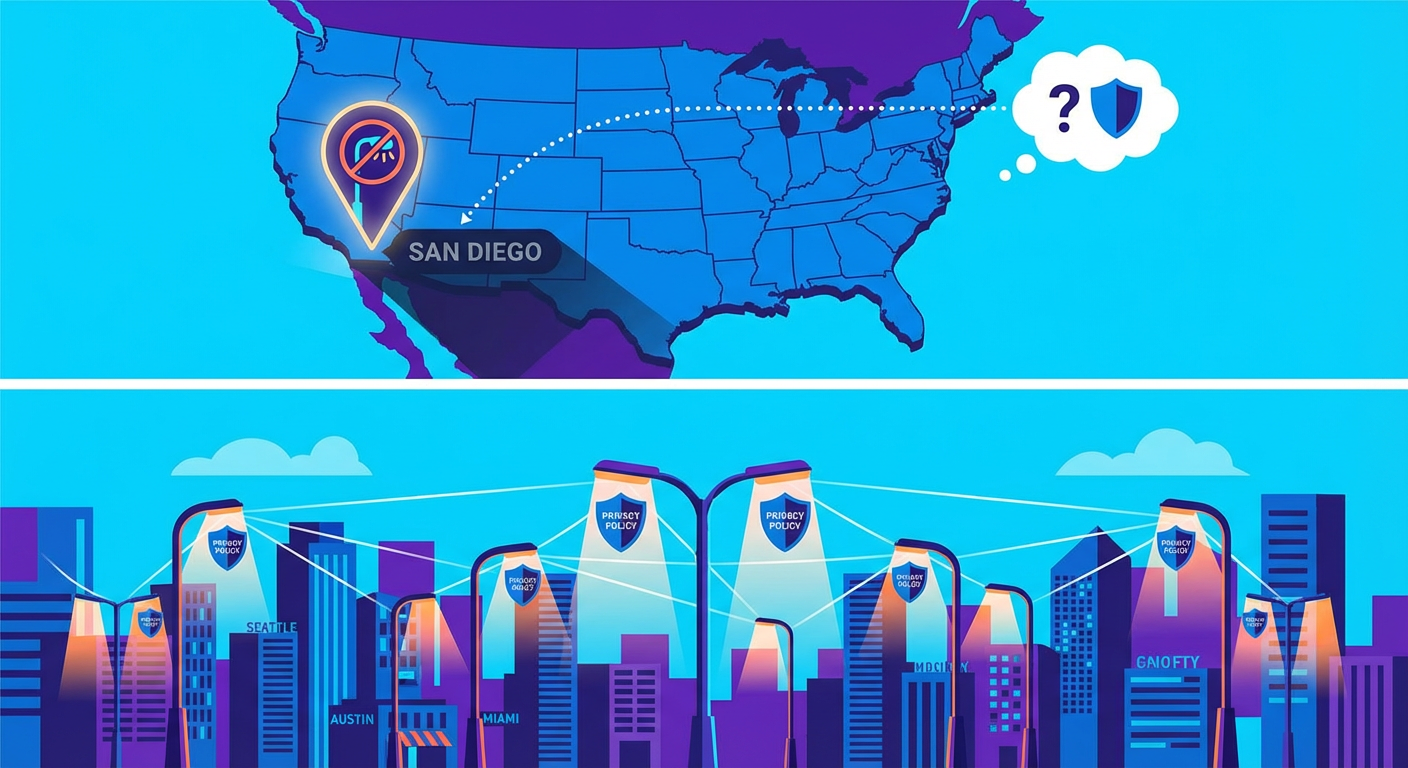
San Diego figured this out the hard way in 2020 when residents discovered that their smart streetlights were feeding information to police without a clear policy in place. The city pulled the plug. But more than 30 cities have quietly brought similar systems back online between 2023 and 2025, just with better privacy language in the contracts. The technology didn’t go away. The objections did.

What We Actually Lost When We Stopped Paying Attention

Before smart streetlights, a streetlight was simple. It turned on at dusk. It turned off at dawn. Nobody knew you walked past it. Nobody was counting. That wasn’t nostalgia talking. That was just how public space worked.

When you lose that baseline of anonymity in your own neighborhood, you lose something specific and functional. You lose the ability to move through your community without creating a record. You lose the assumption that your habits aren’t being sorted, analyzed, and stored somewhere. The feeling of safety in public space was connected to something real: the fact that public space was actually public.

The streetlight doesn’t need to actively surveil to change how you move. It just needs to be there, doing it. That’s the behavior shift that matters. When people know they’re being watched, they change what they do, where they walk, which routes they take home. Researchers have documented this for decades. It’s not paranoia. It’s how human beings actually function.

The trade-off, your city will tell you, is that these systems make streets safer. Better lighting. Faster response to outages. Data that helps city planners understand traffic patterns. All of that might be true. But nobody voted specifically on that trade-off. They voted on a budget line item.

How Other Cities Actually Protected Themselves

This isn’t unsolvable. Some municipalities figured it out. Cities that adopted model surveillance ordinances like those promoted through the ACLU Community Surveillance Oversight Report 2025 saw a 40 percent reduction in resident privacy complaints compared to cities without explicit policies. Those policies required clear public disclosure of what data the streetlights collect, who can access it, and how long it’s stored. They required explicit council votes on data-sharing agreements, not hidden vendor clauses. They required actual oversight, meaning real people reviewing what’s happening on a regular basis.

Some cities even required that cameras be disabled by default and only turned on during specific situations, with documented justification. That sounds expensive, but it’s not. It’s a setting. It costs nothing to enable. It costs nothing to disable.

What these cities did was straightforward: they treated the data collection as a separate decision from the energy savings. They said, yes, we want efficient streetlights. No, we don’t want an undisclosed surveillance network. We want both things, and we’re willing to buy hardware that does one thing very well instead of hardware that does many things we didn’t approve.

What You Actually Do Right Now

Check your city council’s next agenda. Search for smart streetlights, LED retrofit, intelligent lighting, or street infrastructure technology. If it’s there, read the staff report before the meeting. If it’s not there yet, ask the public works director when they’re planning to roll it out. They probably have a grant already approved or a vendor already selected. You’re not behind.

Pull the contract. It’s public record. Ask your council member specifically: who can access the data? For how long? Can it be shared with police? Does any third party have access? Make them answer before the vote, not after.

If you find out your system is already installed and already collecting data, request the vendor agreement and the data-sharing policies. If they don’t have explicit policies in writing, that’s the actual problem. That’s fixable.

Bring a friend to the meeting. Seriously. Bring someone who cares about your street, your neighborhood, or just having city council actually answer questions. Bring coffee. This is not complicated stuff. It’s just stuff that requires someone to show up and say: we want the light that’s efficient and also we want the public space that’s actually public. Can we have both?

The answer, in most cases, is yes. But only if someone asks.

What Your City Council’s 2025 Budget Actually Says About Affordable Housing (And What They’re Not Telling You)

The Numbers Everyone’s Dancing Around

Your city council probably passed their 2025 budget sometime last fall. You might have seen a headline. You probably didn’t read the 200-page document. Neither did most people. But here’s what’s hiding in there: the choices they made about housing money, and how those choices stack up against what’s actually needed.

Let’s start with the scale of the problem. Across the country, there’s a shortage of 7.3 million affordable rental homes for extremely low-income renters. That’s not a slow-moving crisis anymore. That’s the water level now. The federal government allocated $73.3 billion for housing assistance programs in 2025, which sounds enormous until you realize it falls about $12 billion short of what advocates say is necessary. Meanwhile, 22.4 million renter households are spending more than 30 percent of their income on housing. That’s not a preference. That’s financial suffocation.

So when your city council sits down to talk about the 2025 budget, they’re working within a system that’s fundamentally broken. Some of them know it. Some of them really don’t want to know it. Most are caught somewhere in between, trying to do something with limited tools and limited money.

What Your Council Actually Budgeted for Housing

The real conversation starts when you actually look at line items. Most city budgets allocate housing funding through some combination of department budget, capital improvement funds, and partnerships with nonprofits. The percentages vary wildly.

Some cities put real money toward affordable housing. Others treat it as a side project. The difference isn’t always ideology. It’s often capacity. A smaller city might have one person handling both affordable housing and economic development. That person is working 60-hour weeks and still getting to maybe 40 percent of what needs doing. Meanwhile, a larger city might have a whole department, which sounds great until you realize the department itself has to fight for budget approval every year.

The tension here is real and worth understanding. City finance directors will tell you they have hard constraints. They have to maintain roads. They have to staff fire departments. They have obligations to pension funds. When money is scarce, housing often loses that fight, not because anyone’s evil, but because the road doesn’t fix itself. Housing advocates will tell you that housing is foundational. Without it, nothing else works. Both things are true.

The Zoning Question: Where the Real Power Actually Lives

Here’s what doesn’t show up in the housing budget line item but absolutely shows up in people’s rent: zoning. Your city council controls zoning. That’s not small.

Zoning determines what can actually be built. A lot of city councils spent 2024 arguing about this. By 2025, 68 percent of municipalities with populations over 50,000 had updated their zoning codes since 2023 to allow some form of accessory dwelling units. That’s meaningful movement. It means more cities are saying yes to mother-in-law apartments, backyard cottages, legal duplexes.

But here’s the catch. Zoning reform doesn’t automatically create affordable housing. It creates the possibility of more housing. Whether that housing is actually affordable depends on what happens next. A developer can build a legal duplex and charge market rate for both units. That helps people who already have resources. It doesn’t help someone working two jobs who can’t afford their current apartment.

This is where the disagreement gets interesting. Progressive city councils say zoning reform is the first step — you can’t build your way out of affordability without relaxing zoning. Conservative city councils worry about neighborhood character and parking and school capacity. Both concerns are real. The question is what you prioritize when they conflict.

What’s Actually Working: Community Land Trusts and the 26 Percent Solution

Not everything is stuck. Some strategies are actually producing results. Community Land Trusts are one of them. The model is older than you might think, but it’s getting more attention now because it works. Here’s how: a nonprofit or community organization holds the land in trust. Residents own the buildings on that land. When someone buys a home through a CLT, the land stays affordable in perpetuity. The next buyer pays less. The buyer after that pays less. It compounds.

The numbers back this up. A 2025 Urban Institute analysis found that cities using Community Land Trusts reduced average homebuyer costs by 26 percent compared to traditional market-rate purchases. That’s not hypothetical. That’s actual money in actual people’s pockets.

So why isn’t every city doing this? Money, mostly. And political will. And knowing how. CLTs require upfront investment and ongoing administration. They require city councils to be willing to hold land or support nonprofits that hold land. Some cities have done it. Burlington, Vermont. Portland, Oregon. Minneapolis. Others haven’t figured it out yet. Others are fighting about whether they should.

The Question You Actually Need to Ask

When you read your city’s 2025 budget, here’s what matters: what percentage of total budget is going to affordable housing creation, not just subsidies or assistance? What’s the zoning trajectory? Is your city actually making it legal to build more diverse housing types, or just approving it theoretically? Does your city support or oppose community land trust development? Are there partnerships with nonprofits that are producing actual units?

Read the NLIHC 2025 Housing Gap Report if you want national context. Check the Harvard Joint Center for Housing Studies 2025 Report to understand what’s happening with cost burden in your region.

Then show up. Not in an angry way. In a present way. City council meetings are public. The documents are public. You don’t need permission to care about this or to ask questions about it. The people making these decisions are your neighbors. They’re usually doing their best within impossible constraints. That doesn’t mean you can’t push them. It means you should. Fairly, specifically, with data. That’s how things actually change.

The ADU Gold Rush Has Arrived — And Your HOA Didn’t Get the Memo

The Legal Landscape Just Shifted Under Your Feet

Two things happened in the last three years that nobody really talks about at neighborhood barbecues but absolutely should. First, the law changed so fast that most people missed it entirely. By early 2026, thirty-four states had passed legislation that basically says: your city and county cannot ban accessory dwelling units on single-family lots anymore. That number was eighteen states just four years ago. Texas and Florida joined in 2025. This is not a gentle suggestion. This is preemption. The old rules your neighborhood has been operating under, the ones that said “only one house per lot, period,” are legally dead in most of the country.

The ADU Gold Rush Has Arrived — And Your HOA Didn't Get the Memo
The ADU Gold Rush Has Arrived — And Your HOA Didn’t Get the Memo

The second thing is that almost nobody told their homeowners associations about it. And the HOAs themselves? Many are operating like the legal ground didn’t shift at all. Over four thousand homeowners associations in states with these new preemption laws still have not updated their covenants, conditions, and restrictions. That is the formal name for the rulebook that governs what you can and cannot do on your own property. The Foundation for Community Association Research flagged this in 2025 as a crisis affecting roughly three hundred eighty thousand households. It is not quiet once you start looking into it.

Illustration for The ADU Gold Rush Has Arrived — And Your HOA Didn't Get the Memo
Illustration for The ADU Gold Rush Has Arrived — And Your HOA Didn’t Get the Memo

What We Actually Lost When Houses Got Bigger and Rarer

Before we talk about what an ADU is or why the economics work now, it helps to remember what neighborhoods were actually like for most of the twentieth century. Lots of American single-family streets used to have small rental units in the backyard. Guest cottages. In-law apartments. Rooms that rented to students or young workers. These were not luxury amenities. They were infrastructure. They were how a middle-income household actually made rent work, or how a grown child moved out but stayed close, or how a retired couple stayed in their house by taking in a tenant. The structures were modest. The arrangement was ordinary.

Then zoning laws changed everywhere in the middle of the twentieth century. Single-family zoning became almost religious in American planning. One house per lot. Period. Anything else was wrong, an intrusion, a density problem, a lowering of property values. The rental cottages got demolished or converted. The accessory structures got ruled illegal. This was not accidental. It was designed to create scarcity, to make land valuable, to keep certain kinds of people out. And it worked exactly as intended. It also made it nearly impossible for anyone who was not already wealthy to stay in their own neighborhood as a renter, and it made family caregiving arrangements logistically brutal. We got quieter streets. We also got a broken housing market and a lot of people who have no way to stay close to the people they love.

California Proved the Money Math Actually Works

California started allowing accessory dwelling units again in 2017. The laws got stronger and more specific over several years. By 2024, California had permitted twenty-three thousand ADUs in a single year, according to the California Department of Housing and Community Development. That is real scale. Not plans. Not proposals. Permitted, built, occupied structures.

The economics are what caught investor attention and then national attention. A Freddie Mac study in 2025 found that ADU construction costs average one hundred eighty thousand dollars nationally. The median monthly rent those units generate is nineteen hundred dollars. Do the math yourself. That is a six point three percent average cap rate, which outperforms most small investment properties. It also means a middle-income homeowner can build an ADU, cover the mortgage on the construction, and build equity in their home at the same time. This is not speculation. This is what the data shows. You can check the numbers on California Department of Housing and Community Development ADU Data if you want the raw state-level picture.

But Here Is Where It Gets Messy: Your HOA Probably Disagrees

State law says you can build an ADU. Your city probably now allows it. Your neighborhood HOA says absolutely not. That sentence is not an exaggeration. It is the current lived reality for hundreds of thousands of homeowners. The state preemption laws are clear, but they are generally written in a way that overrides local zoning codes. HOA restrictions are murkier. The HOA covenant is a private contract between homeowners, not a city zoning code. So what happens when you want to build an ADU but your HOA bylaws explicitly forbid additional structures? The answer is: you might have to sue your HOA, or your HOA will send you a cease-and-desist letter, or you will get caught in a years-long dispute. None of those outcomes is what state legislators intended.

The Foundation for Community Association Research data showing over four thousand HOAs have not updated their CC&Rs points to something that is often strategic, not just lazy. An HOA that does not formally acknowledge the new state law might argue the old covenant still stands. Some HOAs are fighting preemption in court. Some are quietly allowing ADUs and hoping nobody notices. Some are updating their rules but adding restrictions that technically comply with state law while making ADU construction practically impossible for most homeowners.

Who Actually Wants to Build an ADU (And It Is Not Who You Think)

The financial argument is real. But something else is happening underneath that number. AARP released a 2025 survey asking adults over fifty whether they would consider building an ADU. Forty-five percent said yes. The top reason? Not rental income. Multigenerational housing. They wanted to house a family caregiver or an adult child. They wanted their parents close by. They wanted to stay in their own home while making it work financially and relationally with the people they love. You can find more on this at the AARP ADU Policy and Resource Center, which has put real resources into understanding this shift.

This matters because it reframes what an ADU actually is. It is not primarily an investment strategy for young landlords. It is primarily a way to handle something that American housing policy has made nearly impossible: staying together as a family across generations, or within a neighborhood, or in a place you actually have roots. It is also a way to solve the caregiver crisis that nobody talks about until it hits your own family. A quiet, practical solution to a structural problem we created on purpose seventy years ago.

What You Should Actually Do Right Now

Read your HOA bylaws. Seriously. Go find them. Get a copy. Look for the section on accessory structures or additional dwellings. Then find out what state your HOA is in and whether that state has passed ADU preemption legislation. Most states have. Call your local city planning department and ask whether ADUs are allowed by local code. Most cities now allow them. Then ask your HOA board whether they have updated their CC&Rs to align with state and local law. The answer might surprise you. If your HOA has not updated their restrictions, ask them directly why. Ask them to show you their legal analysis of how the old covenant interacts with new state preemption law.

This is not confrontational. This is information gathering. You need to know whether you actually have a right to build an ADU on your own lot in your own neighborhood. Because if state law says yes and your HOA says no, you are in the gap. And the gap is where the legal fights are happening right now. It is also where the three hundred eighty thousand households are currently stuck. The law is changing. The gap will close, eventually. But how it closes, and how fast, partly depends on homeowners asking questions and refusing to accept the pretense that the old rules still apply when they do not.

What questions do you have about ADUs in your neighborhood? Have you looked at your HOA bylaws lately? Let us know what you find.

Extreme Heat Is Now an Official Municipal Emergency — What Your City’s 2025 Heat Action Plan Actually Promises

This Isn’t Hypothetical Anymore

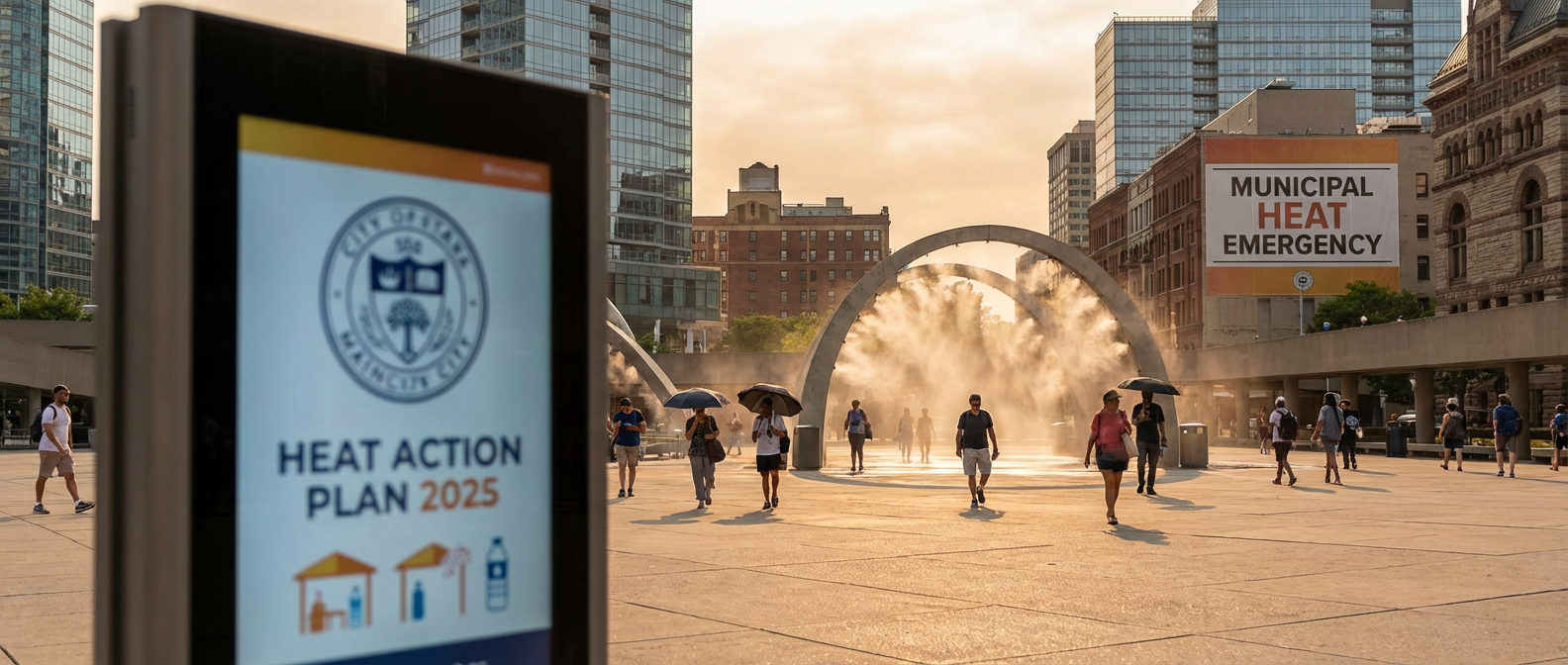
Last summer, more than 50 cities across North America activated formal heat emergency protocols for the first time in their histories. That’s not a projection or a worst-case scenario. That’s what actually happened. Last year.

Extreme Heat Is Now an Official Municipal Emergency — What Your City's 2025 Heat Action Plan Actually Promises
Extreme Heat Is Now an Official Municipal Emergency — What Your City’s 2025 Heat Action Plan Actually Promises

The numbers are stark. NOAA confirmed 2024 as the hottest year on record globally, and their March 2025 seasonal outlook projects above-normal summer temperatures for roughly 70% of the continental U.S. That’s not doom-scrolling. That’s the federal climate data center laying out what’s coming.

What this means for you: Your city probably has a heat action plan now, or it’s scrambling to finalize one. But here’s the thing nobody tells you. Most people don’t actually know what their city promised to do when heat becomes an emergency. And if you don’t know what’s supposed to happen, you can’t hold anyone accountable when it doesn’t.

Illustration for Extreme Heat Is Now an Official Municipal Emergency — What Your City's 2025 Heat Action Plan Actually Promises
Illustration for Extreme Heat Is Now an Official Municipal Emergency — What Your City’s 2025 Heat Action Plan Actually Promises

What the Data Actually Says About Heat in Cities

Emergency room doctors have been noticing something serious. Heat-related visits to emergency departments jumped 32% nationally between 2019 and 2024 according to CDC Environmental Health Tracking Network data. That’s not a gradual trend. That’s a steep climb in just five years.

But here’s where it gets unfair. Your neighborhood probably isn’t as hot as downtown. Urban heat islands are real physics, not metaphor. City centers can run 7 degrees Fahrenheit hotter than the suburbs just a few miles away because of asphalt, concrete, and fewer trees. The poorest neighborhoods in most cities are also the hottest neighborhoods. This isn’t coincidence. It’s history baked into zoning maps.

That’s why the CDC data matters more than the headline temperature. The people most at risk aren’t evenly distributed. They’re concentrated in specific ZIP codes. And that’s exactly what your city’s heat action plan should address.

The Phoenix Model and What Other Cities Are Actually Doing

If your city’s heat plan got any media coverage, it probably referenced Phoenix. For good reason. Phoenix expanded its Heat Relief Network in 2025 and opened 79 cooling centers that handled over 600,000 visitor contacts during summer months, according to Maricopa County public health reports. That’s not just opening buildings. That’s creating accessible infrastructure.

But Phoenix also had the advantage of being forced to think seriously about heat for decades. Most cities are newer to this, which means you’re about to watch best practices get copied, sometimes well and sometimes badly.

Here’s what a real heat action plan promises to do: identify vulnerable populations and the neighborhoods they live in; ensure cooling centers are accessible by transit, have extended hours, and don’t require ID or residency proof; create an emergency alert system that reaches people without smartphones or internet access; set up wellness checks for elderly and disabled residents; and establish protocols for when power fails or grid demand spikes. Most plans miss at least one of these pieces.

Check your city’s plan. Find the actual document. See which pieces are there and which ones got quietly skipped or promised for “later years” of implementation.

The Green Infrastructure Thing Actually Works (And It’s Not Tree-Hugging)

A 2025 Urban Land Institute study found something that should matter to city planners and taxpayers alike. Trees and green infrastructure reduce surface temperatures by 2 to 9 degrees Fahrenheit. Cities with 30% or more tree canopy cover had 19% fewer heat-related hospitalizations per capita. That’s not a nice side benefit. That’s a measurable public health outcome.

Which is why tree planting shouldn’t be treated as optional civic virtue signaling. It’s infrastructure investment. It belongs in the same budget category as streets and water systems.

Most cities’ heat action plans mention trees somewhere. Count how specific they are. Do they commit to actual numbers? Actual neighborhoods? Actual timelines? Or does it say something vague like “increase urban canopy where feasible.” Feasible is a weasel word that means nothing.

This is also where funding becomes crucial, and funding is currently uncertain. The EPA’s Environmental Justice Collaborative Problem-Solving grants, totaling $50 million distributed in 2024 for urban heat mitigation projects, were placed under federal review in early 2025. According to the Environmental Defense Fund’s federal budget tracker, 34 city projects now sit in limbo. Your city might be one of them.

What You Can Actually Do This Week

Get your city’s heat action plan. It’s a public document. Email your city clerk or go to the municipal website. Actually read it. Spend an hour with it. You don’t need a PhD in public health.

Look for three things. First, which neighborhoods are identified as high-risk? Is yours listed? Second, what are the specific cooling center locations and their hours? Write them down. Give them to a neighbor who doesn’t have a smartphone. Third, what’s the alert system? How does it work? Can you sign up?

Then ask your city council member or local representative one direct question: What happens if the power grid fails during a heat emergency? If they don’t have a clear answer, that’s a gap you found. That’s actually useful.

Extreme heat is now an official emergency in most cities, which means your city has made promises. The real question is whether those promises are specific enough to keep, fair enough to matter for the neighborhoods that need it most, and funded well enough to survive political budget cycles. You can find the answer yourself. And you can ask the people who are supposed to deliver on those promises to actually do it.

When Neighbors Became the Safety Net: What We’ve Built Since 2020

The Networks That Stuck Around

Remember when mutual aid felt like something brand new? When we were all figuring out how to leave groceries on doorsteps and coordinate via group texts because the system wasn’t going to help us? That was 2020. Six years later, something unexpected happened: most of those networks didn’t disappear. They evolved.

When Neighbors Became the Safety Net: What We've Built Since 2020
When Neighbors Became the Safety Net: What We’ve Built Since 2020

The mutual aid groups that sprouted up during lockdown aren’t just surviving in our city. They’re doing something stranger and harder: they’re becoming infrastructure. Not the kind anyone planned for. Not the kind the city budget committee ever debated. Just the kind that shows up when you need it.

What’s remarkable isn’t that people helped each other in a crisis. What’s remarkable is that we kept going. Mutual aid groups have stayed active in neighborhoods across the country because they filled a gap that was already there. The crisis just made it visible.

The Tools Made the Scale Possible

Here’s something practical that doesn’t get enough attention: the technology actually worked this time. When Slack, Discord, and Airtable became the coordination backbone for distributed organizing, something shifted. You could have fifty people helping with food distribution across three neighborhoods without needing a central office or a coordinator on call 24/7.

That matters because it lowered the barrier to staying organized. You don’t need a charismatic leader or a grant to keep a spreadsheet updated. You don’t need a storefront to be real. A Discord server with clear channels and a shared Airtable tracking who needs what and who’s delivering it? That’s enough. That’s actually a lot.

But here’s where it gets complicated. The same tools that enabled rapid coordination also created new problems. Which community members can access a Slack workspace? What happens when someone doesn’t have reliable internet? How do you make decisions when the people doing the actual work are scattered and maybe only talk to each other through screens? These aren’t small technical questions. They’re questions about who gets included and who gets left out of the organizing.

Where Food and Land Became Political

Food sovereignty movements aren’t just about eating better vegetables. They’re about the fact that your neighborhood’s food system is someone else’s supply chain, and when it breaks, you’re hungry. Community land trusts aren’t just about growing tomatoes. They’re about the fact that land in this city costs more than most people make in a year.

Urban areas have watched these movements explode. Community gardens. Rooftop farms. Land trusts that buy property and hold it so that a neighborhood can actually afford to live there and grow food instead of just watching their block get flipped. These aren’t fringe activities anymore. They’re how people are directly responding to the fact that the market isn’t going to feed us or house us at a price that makes sense.

The disagreement here is real though, and it’s worth naming. Some longtime community members see these newer initiatives as outside energy that doesn’t understand the neighborhood’s actual history. Others see them as finally bringing resources and visibility to work that should have been supported years ago. Both perspectives are tracking something true. The structural problem is that either way, the city isn’t providing stable funding for any of it. So communities have to choose between infighting about who’s the “real” organizer or figuring out how to work together despite different approaches.

Tenants Found Their Leverage

Tenant organizing became urgent because housing stopped being a place to live and became an investment vehicle. When rents jumped 30 percent in five years across major cities, something changed in people’s heads. Suddenly it wasn’t radical to talk about collective action. It was basic math.

Tenant unions started winning real things: rent freezes, stronger eviction protections, right-to-counsel policies. Not everywhere. Not even in most places. But enough places that the organizing became worth the effort. Resources like Shelterforce community development started documenting what worked, what didn’t, and why local organizing was suddenly effective where national housing advocacy had stalled.

The tension here is instructive though. Landlord associations argue that tenant organizing ignores the costs of maintaining buildings and makes it harder to invest in neighborhoods. Tenants point out that buildings were being maintained just fine before rents became extraction mechanisms. The structural reality is that housing is being treated as an asset class instead of a basic need, and those two things are incompatible. Local organizing wins are partial victories because they’re fighting against national capital flows and zoning laws that aren’t local.

Participatory Budgeting Changed What’s Possible

Over 1,500 cities globally have experimented with participatory budgeting. That means actual residents get to vote on how some portion of the municipal budget gets spent. Not advisory votes. Actual control over real money.

It sounds small until you realize what it means: communities can fund what matters to them instead of waiting for the city council to prioritize it. Street repairs. Parks. Community centers. Youth programs. The specific things that make a neighborhood livable get decided by the people living there.

But participatory budgeting has exposed real disagreements about what a neighborhood actually is. Lower participation rates in some areas mean that whoever shows up gets to decide for everyone. That can mean longtime residents get outvoted by newer arrivals. Or it can mean that people with the most time to engage in civic participation get to set priorities for people working multiple jobs. The process itself can highlight who has power and who doesn’t. That’s valuable. It’s also uncomfortable.

Why Local Organizing Works When Everything Else Stalls

National party politics moves slowly when it moves at all. National advocacy groups are fighting over priorities that don’t match your neighborhood’s actual situation. But your block association? Your tenant union? The food network that actually knows who’s vulnerable? Those can move. Those can change something.

Local organizing works precisely because it doesn’t have to convince millions of people. It has to move your block, your building, your neighborhood. The outcomes are smaller but they’re real. You can see them. You can point to them. People in your community did this.

Examples like Big Door Brigade mutual aid show what that looks like: specific networks solving specific problems with specific people. Not perfect. Not a replacement for systematic change. But real.

If you’re reading this and thinking about what’s possible where you live, that’s the actual start. Not the revolution. Just the practical question: what does your neighborhood actually need right now, and who would show up to help if you asked? Everything else builds from there.

The 15-Minute City Backlash Has Come to America: Is Your Town Next in the Conspiracy Theory Crosshairs?

How a Traffic Experiment in Oxford Became a Global Conspiracy Theory

In 2022, Oxford, England tried something pretty straightforward. They launched a traffic filter pilot that restricted vehicle access to certain city zones during peak hours. The goal was simple enough: reduce congestion, improve air quality, make the neighborhood feel less like a parking lot. What happened next wasn’t simple at all. Over 100,000 people signed petitions against it. The story went global. And somehow, this local traffic experiment became the centerpiece of a sprawling conspiracy theory that has now landed squarely in American city council chambers.

The 15-Minute City Backlash Has Come to America: Is Your Town Next in the Conspiracy Theory Crosshairs?

Here’s what actually happened versus what people thought happened. The real pilot was about managing traffic flow in a dense urban area. The conspiracy narrative that spread online claimed it was a plot to confine residents to small zones, eliminate car ownership, and control movement. None of that was remotely true, but the misinformation stuck. It mutated. It crossed the Atlantic. And now it’s influencing policy decisions in your hometown.

Illustration for The 15-Minute City Backlash Has Come to America: Is Your Town Next in the Conspiracy Theory Crosshairs?

The Organized Misinformation Campaign Is Real and Documented

This isn’t speculation or politics as usual. In March 2025, researchers at the Institute for Strategic Dialogue Misinformation Research released a report documenting exactly what’s happening. They tracked 47 separate U.S. city council meetings across 19 states where people showed up with prepared talking points about 15-minute cities. Same rhetoric. Same fears. Different cities. That’s the fingerprint of a coordinated campaign, not organic concern.

The timing matters too. These appearances ramped up throughout 2025, not randomly. Groups started showing up at planning commission meetings with stacks of printed materials. Social media posts started hitting at scale right before public hearings. Someone was organizing this. And the planners actually trying to do their jobs were caught in the middle.

The American Planning Association on 15-Minute Cities surveyed their members in 2025 and found that 61 percent of urban planners reported encountering organized misinformation at public hearings. That was up from 29 percent just two years earlier. Double. In two years. That’s not a trend. That’s a shift.

Portland’s Six-Month Delay Shows the Real Cost

Portland, Oregon wanted to zone neighborhoods for mixed-use development. More housing options. More walkability. Standard stuff that most cities are considering right now. In 2025, they proposed what they called a Complete Neighborhoods rezoning initiative. It was moderate urban planning, nothing revolutionary. Then the misinformation campaign hit local social media, and residents started showing up to meetings absolutely convinced that the city was about to restrict their driving.

The narrative was false. The proposal never attempted to limit where people could drive. But enough people believed it that the city council delayed the project by six months. Six months. That’s half a year of housing shortage continued. Half a year of people commuting longer. Half a year of someone’s actual life disrupted by false claims about a zoning proposal.

What actually happened in Portland shows how this plays out on the ground. City staff had to spend months just correcting misinformation. They had to produce fact sheets, hold extra community meetings, rebuild trust with people who’d been told lies by strangers on the internet. That’s not governance. That’s a resource management crisis.

The Walkable Neighborhoods Are Actually Where Property Values Grow

Here’s the thing people don’t seem to know. Research published in the Journal of Urban Affairs in late 2025 found that walkable neighborhoods with mixed-use zoning saw median home values increase 18 percent faster than car-dependent suburbs between 2020 and 2024. That’s real data. Not opinions. Not politics. Just what happened to property values.

So the conspiracy narrative says 15-minute cities will destroy your neighborhood. The actual market data says walkable neighborhoods are where wealth is being created right now. Your home appreciates faster. Your kids have more options within reach. Your life gets simpler. But that story doesn’t travel as well on social media as fear does.

The disconnect is wild. People are fighting against proposals that would actually increase their property values because they’ve been convinced those proposals are imprisoning them. That’s not rational self-interest. That’s what happens when a coordinated campaign is designed to confuse.

What Your Town Can Actually Do About This

If your city is considering any kind of walkability initiative or urban planning reform right now, expect this to show up. You don’t have to be surprised by it. You can prepare. Look at what Portland did wrong, not because it’s shameful, but because you can learn from it. Get ahead of the misinformation. Host multiple community meetings early. Be specific about what you’re proposing and what you’re not. Have data ready. Make your planning staff visible and accessible.

The real organizing that needs to happen isn’t the conspiracy spreading. It’s the actual community work that cities do. Talk to your neighbors about what you actually want your neighborhood to be. Read your city council minutes. Show up to planning commission meetings. That work is boring and unglamorous compared to outrage on social media. It’s also the only thing that actually shapes your town.

This is happening now in at least 19 states. The question isn’t if your town is next. It’s whether you’ll be ready when it arrives. Stay informed. Stay engaged. Help your neighbors separate what’s real from what’s been designed to confuse. If you’re reading this and thinking about starting to pay attention to your local planning process, now is exactly the time. Your council could use someone who actually reads the minutes.

Why Our Food Pantry Split in Half (And What It Taught Us About Real Mutual Aid)

The Tuesday Morning Text That Changed Everything

Sarah’s text hit the mutual aid group chat at 7:43 AM: “We need to talk about yesterday’s distribution. Some folks waited three hours while others got priority access. This isn’t working.” Within minutes, the chat exploded. Forty-seven messages before most people finished their coffee. By Thursday, our neighborhood food pantry had split into two separate operations, each claiming to serve the community better.

What started as a disagreement about who gets food first became a window into deeper questions about how we share resources in crisis. The split revealed something most of us hadn’t named out loud: we had different ideas about what mutual aid actually means.

When “First Come, First Served” Meets Real Life

The original pantry operated on simple logic. Every Tuesday at 2 PM, people lined up outside the community center. First come, first served. Fair, right? Not according to Maria, who works two jobs and can’t get there until 4 PM, when the good stuff is gone. Or David, whose wheelchair makes standing in line for hours nearly impossible.

The breakaway group started prioritizing families with children, elderly residents, and people with disabilities. They created a reservation system. The original group saw this as creating hierarchy in a system designed to eliminate it. “We’re not a charity,” said Tom, who helped start the pantry. “We’re neighbors helping neighbors. Everyone’s need is equal.”

Both sides had a point. The question wasn’t who was right, but what each approach shows us about the tensions built into any resource-sharing system. When there isn’t enough food for everyone who needs it, how do we decide who gets what? The answer depends on whether you see mutual aid as radical equality or targeted support for the most vulnerable.

The Numbers Behind the Philosophy

Here’s what the split looked like in practice. The original pantry kept serving about 85 households per week, sticking with their first-come model. Wait times dropped to under an hour. The new pantry serves 60 households through their reservation system, with priority slots for working parents and disabled community members. Nobody waits more than 20 minutes.

But the numbers only tell part of the story. The original pantry draws from a wider geographic area now, including people who drive from three neighborhoods over. The reservation system pantry serves almost exclusively our immediate area, with 70% of users living within six blocks. Different approaches attracted different communities.

The real difference shows up in what each group stocks. The first-come pantry focuses on getting as much food as possible through wholesale partnerships and grocery store donations. Lots of bread, produce past its prime, bulk basics. The reservation pantry puts more emphasis on culturally appropriate foods, working with local restaurants and ethnic groceries. Smaller quantities, higher variety, fresher ingredients.

What Works (And What Doesn’t) in Practice

Six months later, both models work well, which tells us something important about community needs. The first-come pantry is perfect for retired folks, people with flexible schedules, and anyone who can make Tuesday afternoons work. It feeds more people with less administrative overhead. Three volunteers can run the whole operation.

The reservation system serves working families who couldn’t access the original model. It also created space for people who felt intimidated by the line culture that developed around the first-come system. Some folks just don’t feel comfortable advocating for themselves in a crowd. But it requires more coordination, more volunteers, and more advance planning from users.

Neither system solved the real problem: not enough resources for everyone who needs them. The split didn’t create more food in our neighborhood. It created two different ways to distribute scarcity, each serving different populations more effectively.

The Bigger Picture Hidden in Grocery Bags

This split showed us something important about mutual aid that most guides don’t mention. The work isn’t just about sharing resources. It’s about navigating the power dynamics that come up whenever communities organize around need. Who decides how things work? Whose voices get heard? How do we handle conflict without falling apart?

The original pantry’s approach reflects one vision of mutual aid: horizontal relationships where everyone participates equally. No means-testing, no hierarchy, just neighbors sharing what they have. The reservation system represents another vision: using community resources strategically to support people facing the biggest barriers.

Both approaches have merit. Both have limitations. The tension between them shows up in mutual aid networks everywhere, from childcare cooperatives to tool libraries to community gardens. Do we treat all needs equally, or do we prioritize based on vulnerability? Do we serve the most people possible, or focus on serving specific communities well?

What This Means for Resource Sharing Beyond Food

The lessons from our pantry split apply to other resource-sharing efforts. The community bike repair workshop faced similar questions when demand outgrew capacity. Priority for commuters who depend on bikes for work, or first-come-first-served for everyone? The community garden dealt with plot allocation the same way, eventually creating separate sections for experienced growers and newcomers.

These aren’t just logistical problems. They’re questions about values, about who gets served and how. The most sustainable mutual aid networks find ways to experiment with different approaches, learn from disagreements, and adapt based on what actually works for their communities.

What surprised everyone in our food pantry split was how much energy it released. Both groups ended up stronger and more focused. Conflict, handled well, can clarify purpose and strengthen commitment. The people who stayed with each model were the ones most invested in making it work.

Now both pantries share resources when needed, refer people to each other based on what works better for individual situations, and coordinate to avoid duplicating efforts on big initiatives. The split forced everyone to get clearer about what they were actually trying to accomplish.

I think we learned that there’s no single right way to share resources in community. Our differences in approach reflect real differences in need and circumstance. The goal isn’t to eliminate conflict, but to use it to build systems that work better for more people.