Three Regulars, One Counter, and a Revolution
Every Tuesday at 7:30 AM, Maria Santos unlocks the front door of Santos Bakery and flips the sign from “Closed” to “Open.” By 7:45, two familiar faces are already waiting: Tom Chen from Chen’s Hardware three doors down, and Sarah Williams who runs the bookstore across the street. They order the same things. Maria pours coffee before they ask. Tom grabs a blueberry muffin. Sarah gets a croissant.
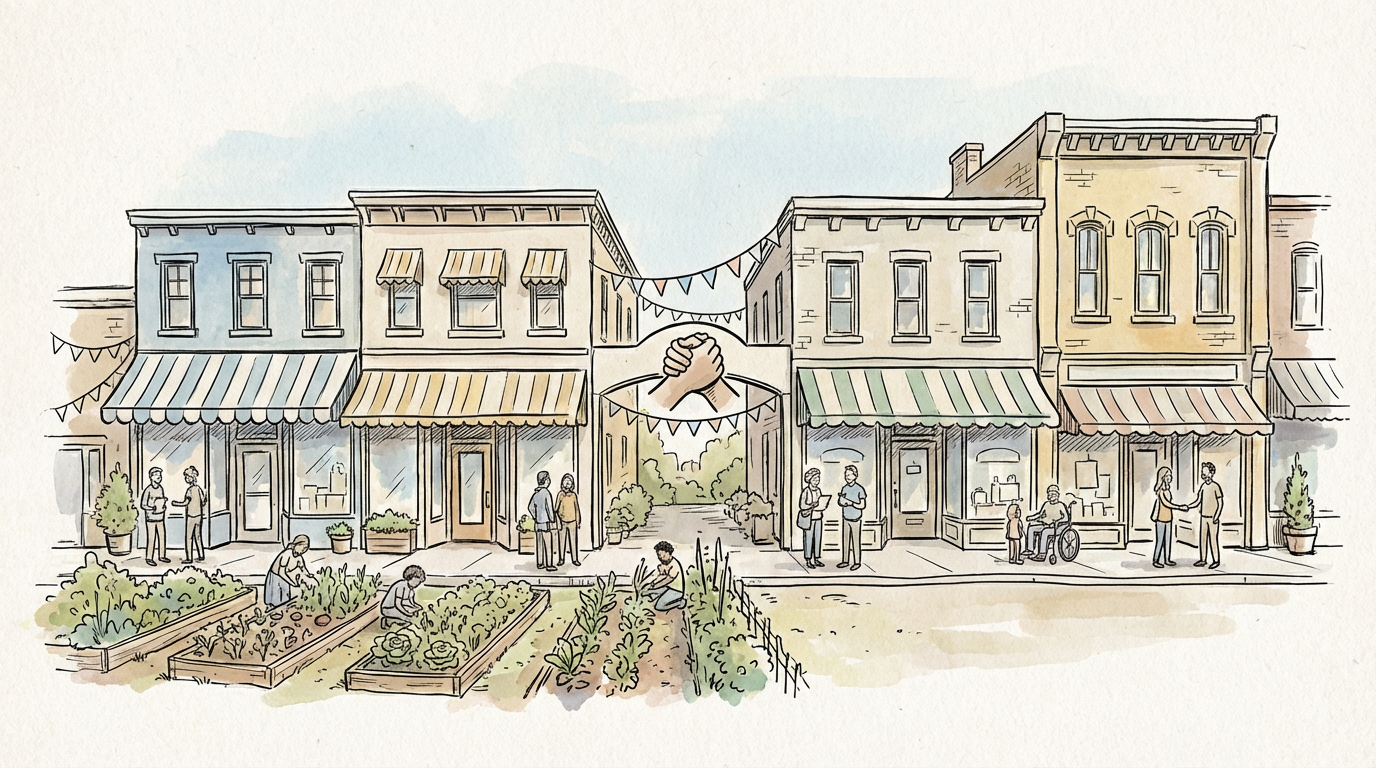
What started as coincidental timing has become something bigger. These three business owners spend twenty minutes every week solving problems together that used to keep them up at night. Last month, they figured out how to share delivery costs with the new courier service. In October, they coordinated their holiday window displays to create a walking theme from block to block. This week, they’re planning a joint social media campaign to highlight each other’s weekend specials.
“We used to compete,” Tom says, stirring sugar into his coffee. “Now we collaborate. Turns out there’s enough business for everyone when we work together.”

The Numbers Behind the Neighborhood
Our downtown district has thirty-seven small businesses across four blocks. Eighteen of them opened in the last five years. According to the city’s economic development report from last quarter, these businesses generated $2.3 million in local tax revenue and employed 127 people. That’s 127 neighbors with jobs they can walk to, 127 families spending money where they live.
But here’s what the report doesn’t capture: Santos Bakery stays open until 8 PM on Fridays now because Sarah’s book club meets next door and members always want coffee afterward. Chen’s Hardware started carrying specialty light bulbs because the new art gallery needed them and Tom didn’t want them driving to the big box store. Williams Books expanded their children’s section because three young families moved onto Maple Street and Maria mentioned they keep asking about story time.
These aren’t statistics. They’re relationships. And relationships, it turns out, are what keep small businesses alive.
When Problems Become Opportunities
Two months ago, the city announced that Main Street would be under construction for six weeks. Torn up sidewalks. Detours. Dust everywhere. The kind of mess that typically kills foot traffic and empties cash registers.
Instead of panicking separately, fifteen business owners met at Santos Bakery on a Sunday morning. They spread the construction timeline across three tables and got to work. The result was “Dig Into Downtown,” a campaign that turned inconvenience into adventure. Customers got stamps for visiting businesses during construction. Full cards earned prizes donated by participating shops. The hardware store sold “I Survived Main Street Construction” t-shirts. The bookstore hosted sidewalk story time.
Revenue actually increased during those six weeks. More importantly, customers discovered businesses they’d never noticed before. The small engine repair shop started getting walk-ins. The alterations service booked solid through December. The antique store sold a 1940s dining set to someone who only came in because they were avoiding the construction noise outside.
“We learned that our biggest asset isn’t our individual businesses,” explains Sarah. “It’s our collective creativity. Who knew construction could be good for business?”
The Ripple Effect Nobody Planned
Success stories have a way of spreading. Last month, the restaurant owners formed their own informal group. They coordinate specials so there’s always something happening on slow weeknights. The auto shops started cross-referring customers based on specialties instead of competing for everything. Even the professional workers are getting in on it. The accountant, lawyer, and insurance agent now share a receptionist and split the cost of the office scanner.
The collaboration goes beyond business too. When the elementary school needed volunteers for their reading program, twelve shop owners signed up. When the community garden project needed funding, local businesses pooled together $3,000 and the materials. When Mrs. Henderson from Oak Street broke her hip, the pharmacist worked with the grocery store and bakery to deliver her weekly necessities.
This isn’t about being nice, though that’s a bonus. It’s about being smart. Strong communities create strong businesses. Strong businesses create strong communities. The cycle feeds itself, and honestly, it feels good to be part of something bigger than your quarterly sales numbers.
Your Tuesday Morning Invitation
Next Tuesday at 7:45 AM, there will be four people gathered around the counter at Santos Bakery instead of three. Dr. Patricia Wong, who just opened a veterinary practice on Second Street, heard about the weekly coffee meetups and asked to join. She wants to introduce herself, learn how things work, and figure out how to contribute.
This is how change happens. Not through grand gestures or complicated initiatives, but through twenty-minute conversations over coffee. Through business owners who realize that helping each other helps everyone. Through neighbors who understand that supporting local business isn’t charity, it’s community investment that pays dividends in ways spreadsheets can’t measure.
The next time you need hardware, groceries, coffee, or books, remember that your purchase is a vote. You’re voting for walkable neighborhoods, local jobs, and the kind of community where people know your name and remember how you like your coffee. You’re voting for the Tuesday Morning Coffee Club and everything it represents. And maybe, if you’re lucky, you’ll catch them in action on a Tuesday morning.